
Managing People, Not Just Headcount
Why your best people have limits you cannot see, how overload removes capability in a fixed order, and how to plan for sustainable performance instead of maximum utilisation.
Read article

Written by
Abhi
Founder & CEO
Published May 11, 2026
AI agents are becoming autonomous, but the infrastructure supporting them lacks the transparency and auditability needed for production scale.
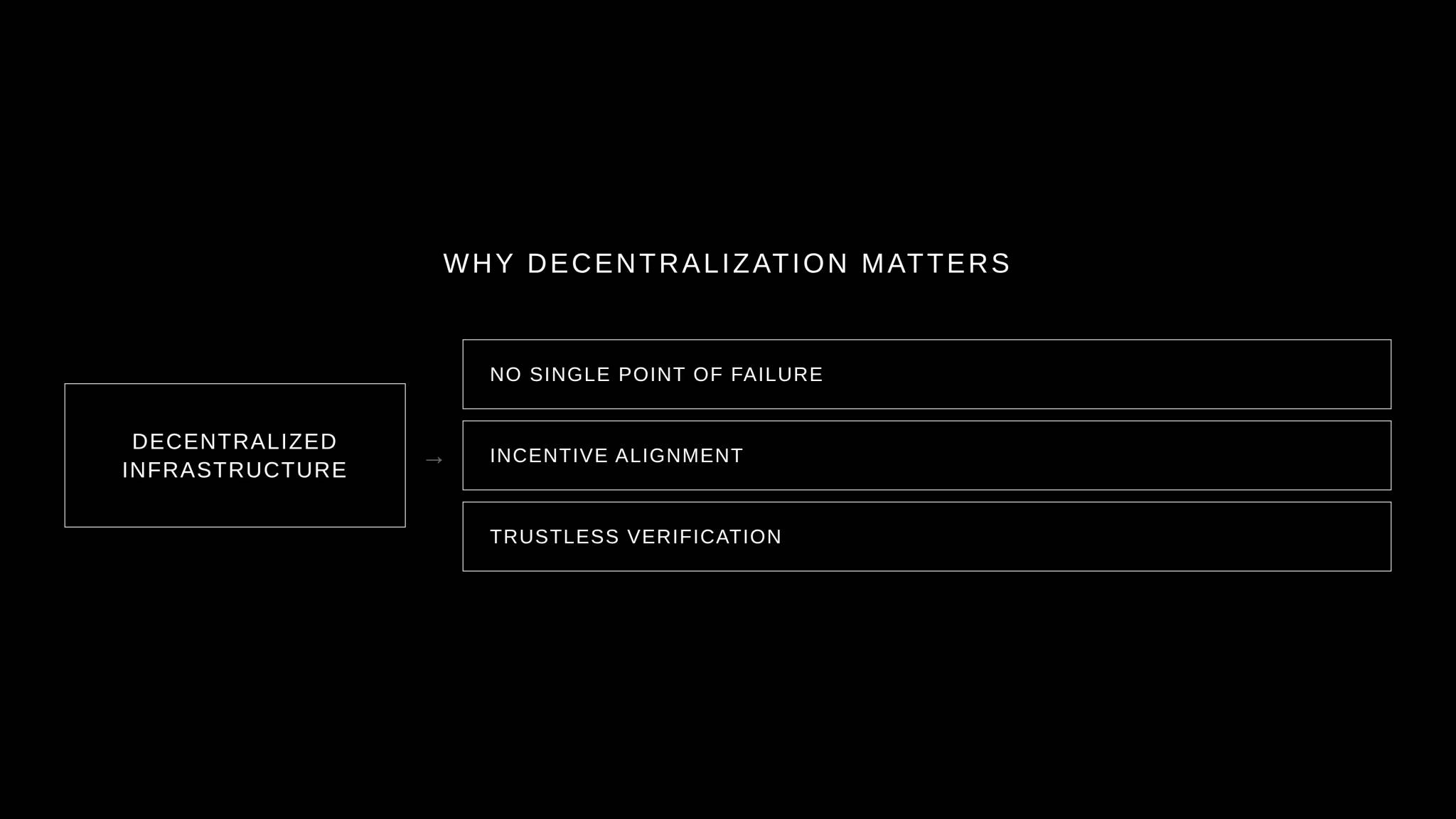
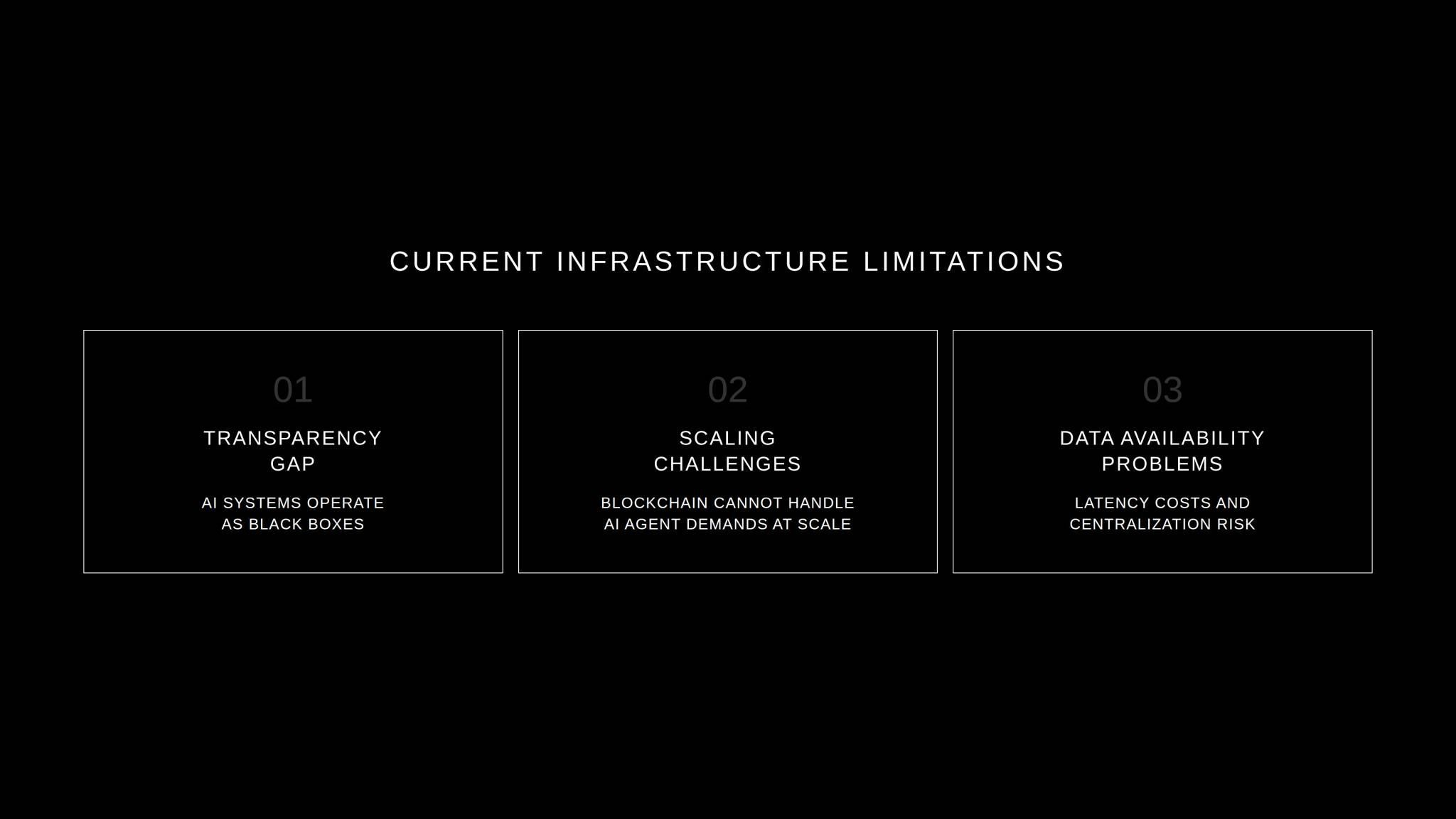
Decentralized infrastructure eliminates single points of failure, aligns incentives through tokenomics, and enables trustless verification. Current limitations include the transparency gap, scaling bottlenecks, and unreliable data availability.
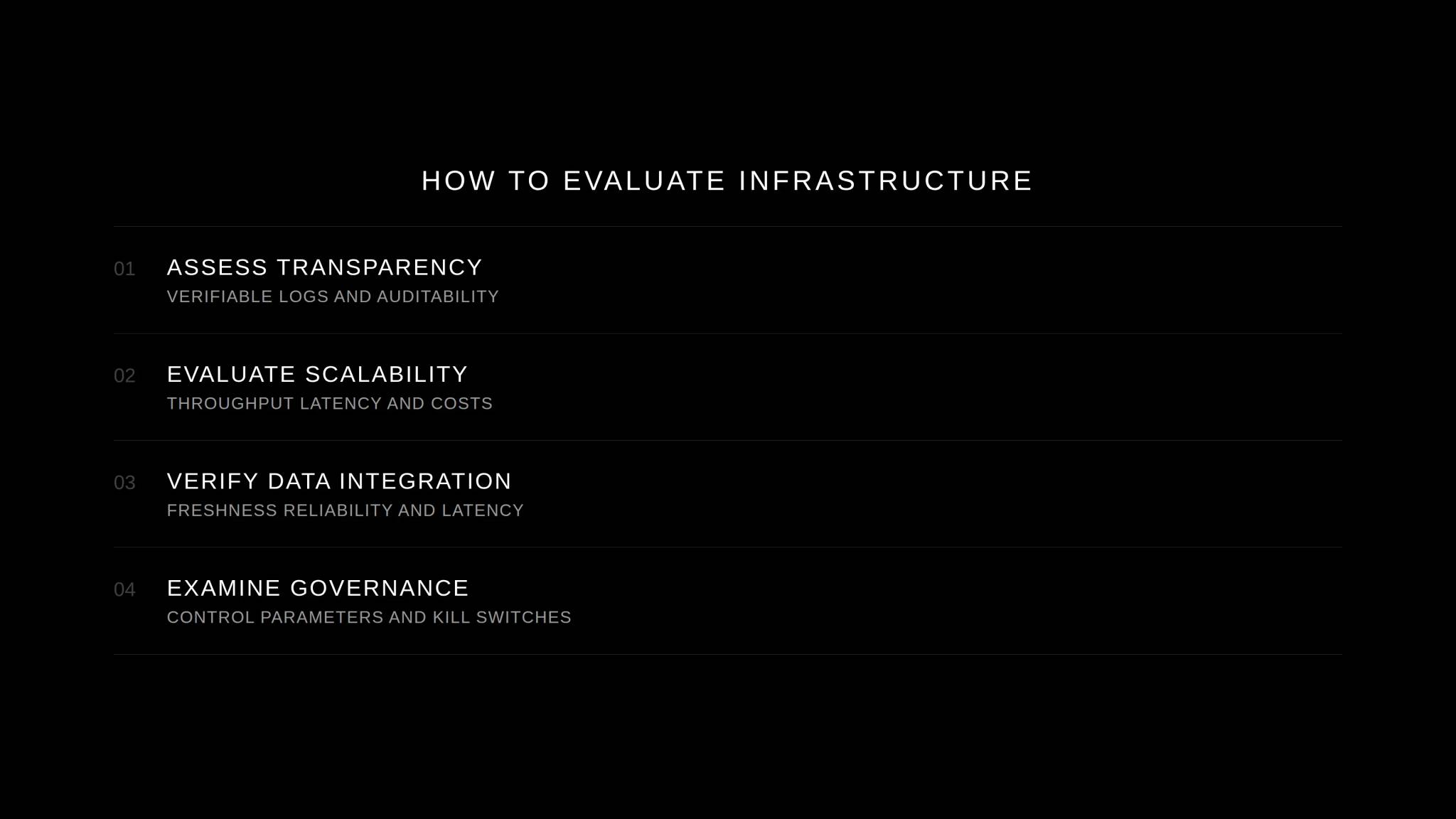
Evaluating infrastructure projects requires assessing transparency, scalability, data integration, and governance. 2026–2027 will see standardization, regulatory clarity, and proof systems moving from research to production.
AI agent infrastructure refers to the technical systems, protocols, and standards that enable autonomous AI agents to operate reliably, transparently, and securely in production environments. It pairs directly with AI Reasoning and Verification systems to enable institutional adoption.
The execution layer provides compute and resources for agents to run continuously. Key requirements include:
Orchestration systems manage agent behavior and enforce constraints:
Production AI agents require full auditability. Every decision and action must be traceable and verifiable.
Decentralized systems distribute execution across multiple participants, improving resilience and eliminating censorship risks.
Decentralized networks align incentives through tokenomics. Network participants are rewarded for:
This is why token launch strategy is foundational to infrastructure projects, not an afterthought.
Decentralized infrastructure enables cryptographic verification of agent behavior without relying on central authority.
Most AI systems operate as black boxes. This:
Current blockchain infrastructure cannot handle computational demands of running AI agents at scale.
AI agents need real-time reliable data. Existing oracle networks have:
Projects are building decentralized compute networks designed specifically for AI agent execution. These provide verifiable compute, allowing external verification of agent behavior.
Intent-based systems allow users to specify goals and constraints, letting the system determine execution.
Emerging infrastructure separates concerns:
This allows combining best-of-breed components.
Cryptographic verification systems enable lightweight proof of correct behavior. Zero-knowledge proofs allow agents to prove correct behavior without revealing computation details.
Does infrastructure provide verifiable logs of agent behavior? Can external observers audit decisions?
Practical evaluation requires:
Check data freshness, reliability, and latency. Are feeds updated in real-time? How is data authenticated?
Who controls agent behavior parameters? How are changes made? Can users kill malfunctioning agents?
Industry consortiums will establish baseline standards for agent safety and transparency. This accelerates adoption by reducing vendor lock-in.
Jurisdictions will publish guidance on autonomous systems operating with high-value assets. This unlocks institutional capital.
Cryptographic proofs enabling lightweight verification will move from research to production.
AP Collective tracks infrastructure development because it determines which projects can scale sustainably. The agency works with projects to develop positioning that emphasizes:
Service coverage spans go-to-market strategy, brand positioning, PR, and partnerships.
Modern decentralized systems outperform centralized alternatives in specific contexts.
Auditability adds minimal overhead when designed correctly.
Different use cases require different infrastructure trade-offs.
AI agent infrastructure is the foundation enabling autonomous systems to operate reliably at scale. Projects investing in transparent, verifiable, decentralized infrastructure will dominate long-term.
Keep Reading
Why your best people have limits you cannot see, how overload removes capability in a fixed order, and how to plan for sustainable performance instead of maximum utilisation.
Why work falls through the cracks on good teams, what the bystander effect and RACI reveal about ownership, and the Single-Owner Standard we use to fix it.
How to build a crypto content marketing engine in 2026: content architecture, credibility, Reddit and digital PR distribution, AEO, and the measurement that earns search, social, and AI visibility.
WHAT'S NEXT
Book a call with the team. No pitch deck required.