
Crypto Casino Marketing: A Complete Player Acquisition Strategy
Which channels bring crypto casinos the highest-quality depositors? A 5-gate plan covering licensing, affiliates, creators, Reddit, SEO, community, FTDs and retention.
Read article

Written by
Abhi
Founder & CEO
Published May 11, 2026
KOL marketing and paid advertising are two of the most widely used growth channels in crypto. Both require a budget. Both generate visibility. But they operate through very different mechanisms and produce different types of outcomes.
KOL campaigns build trust through creators and communities. Paid advertising scales reach through targeting and distribution systems. For most crypto projects, the challenge is not choosing one over the other. The challenge is understanding when each channel performs best and how to combine them effectively.
This guide breaks down the differences between KOL marketing and paid advertising across:
Crypto audiences behave differently from traditional consumer markets because users are:
Trust often matters more than visibility alone. This is why many projects combine paid distribution with creator ecosystems and Web3 community growth strategies rather than relying purely on performance advertising.
The core difference between the channels is how influence is created.
KOL marketing works through trust transfer, creator authority, community influence and social proof When respected creators endorse a project, audiences associate that trust with the product itself.
This is especially important during:
KOL campaigns also generate discussion, resharing, community participation and long-tail visibility.
Paid advertising works through scalable reach with audience targeting, measurable distribution and predictable amplification Ads provide stronger attribution and greater control over campaign delivery.
Paid channels are commonly used for:
However, crypto audiences are often highly ad-resistant, which reduces trust and engagement over time.
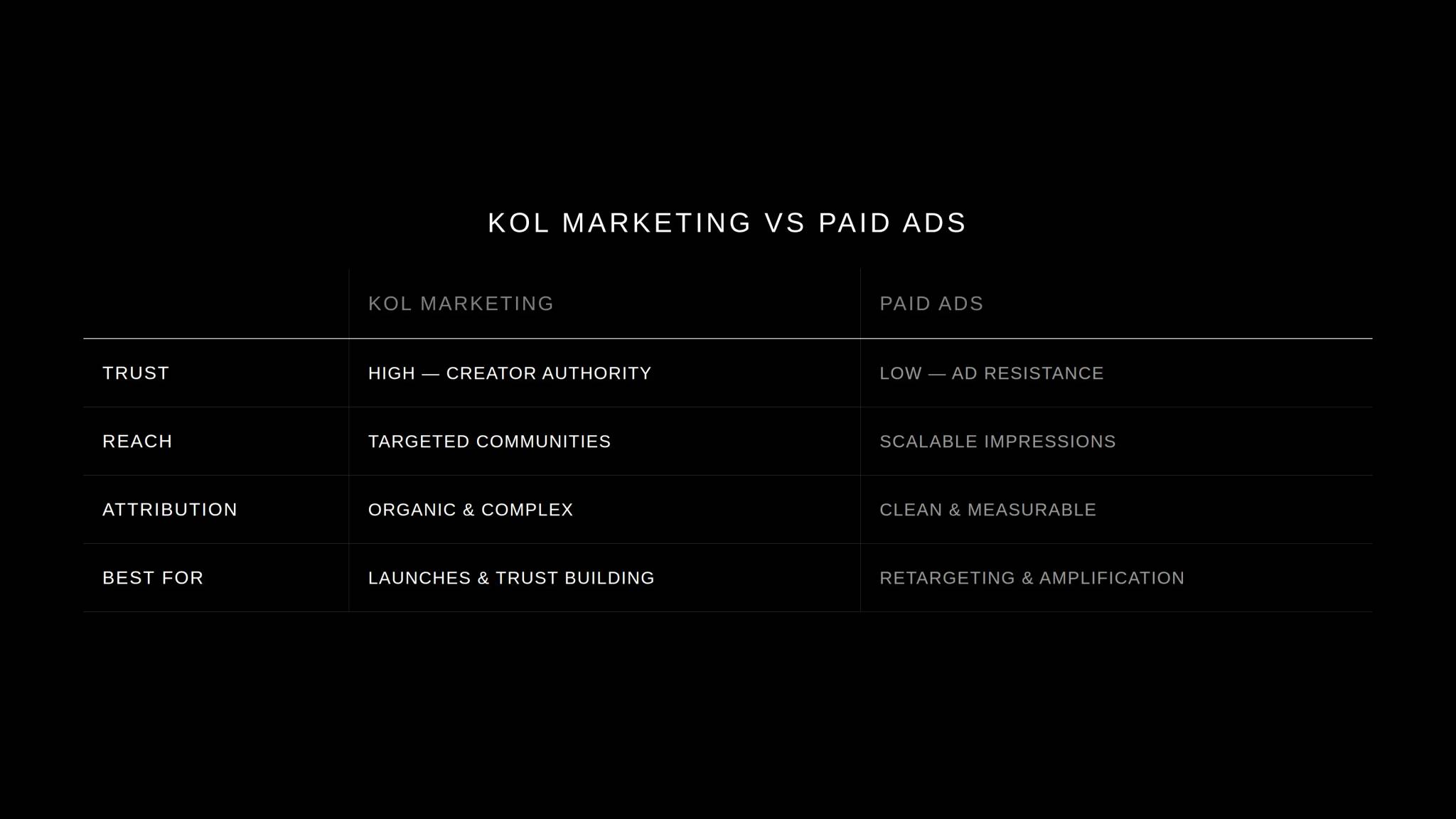
Each channel performs differently depending on campaign goals.
In many cases, KOL campaigns produce higher quality engagement, while paid ads produce larger distribution volume. This is why many projects integrate both channels into broader crypto go-to-market strategy systems.
KOL campaigns tend to perform best when trust and social validation are critical.
KOLs are especially effective for reaching niche crypto-native audiences through trusted ecosystem voices. Projects also benefit from long-tail visibility because creator content often continues generating engagement beyond the campaign window.
Paid advertising performs best when:
Paid media becomes increasingly effective after projects establish baseline trust and recognition. This is particularly important for projects already executing broader crypto marketing funnel strategies.
The strongest crypto growth programs rarely rely on one channel alone.
Instead:
One of the most effective approaches is using creator-generated content as paid ad creative. This combines creator credibility, native content performance and scalable distribution into a more efficient acquisition system.
AP Collective structures channel allocation based on:
Typical allocation models include:
This allows projects to scale while maintaining trust and engagement quality. Many campaigns also combine crypto influencer marketing with creator amplification and ecosystem-focused community strategies.
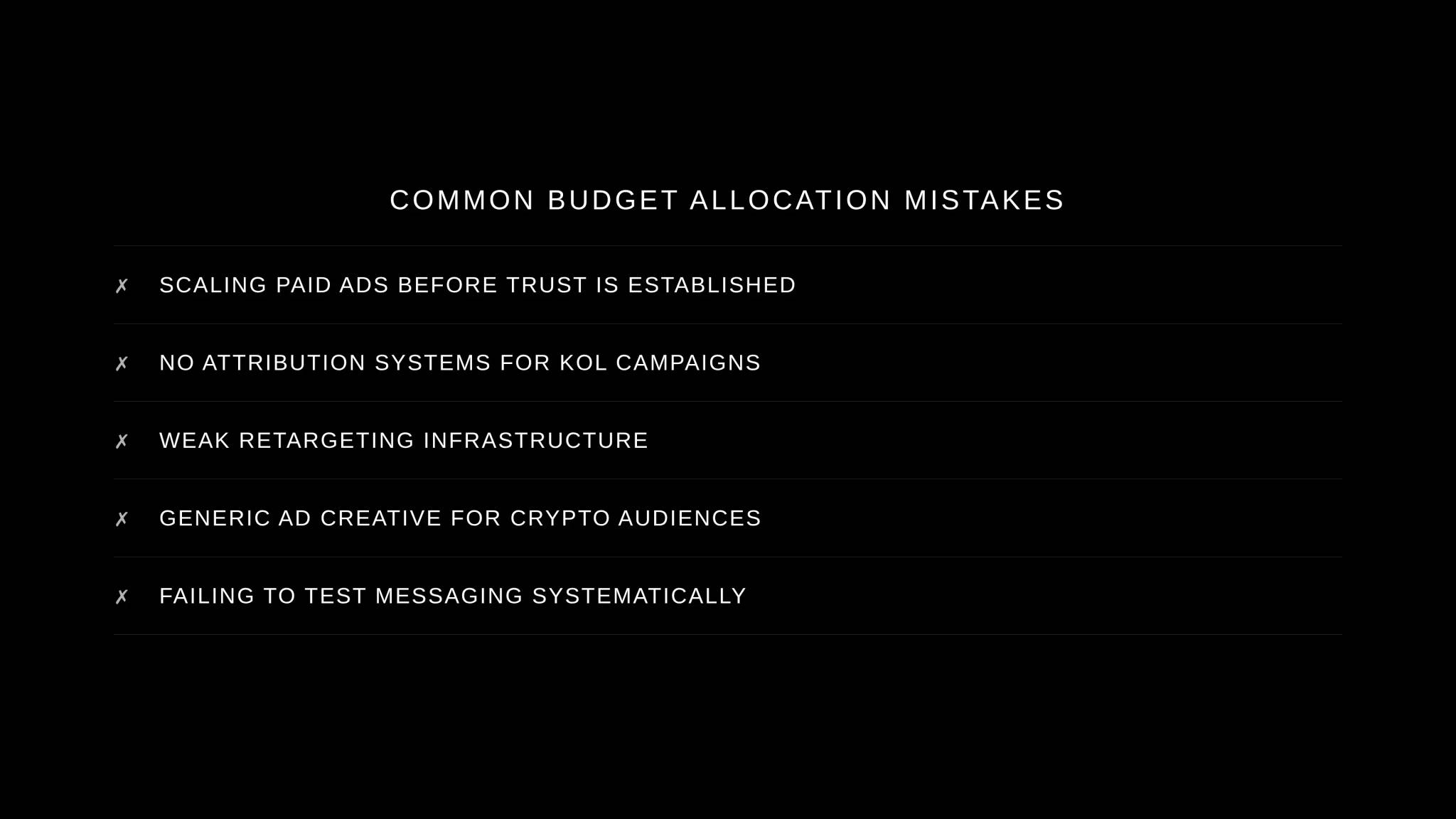
Many crypto projects waste budget because channels are used without strategic alignment.
Common mistakes include:
Without structured attribution, teams struggle to identify which channels actually drive meaningful ecosystem participation.
Comparing KOL and paid ROI requires consistent measurement systems.
Track:
KOL attribution is naturally less precise because organic resharing occurs, discussions spread across platforms and community effects compound over time Paid advertising provides cleaner attribution but often weaker trust signals.
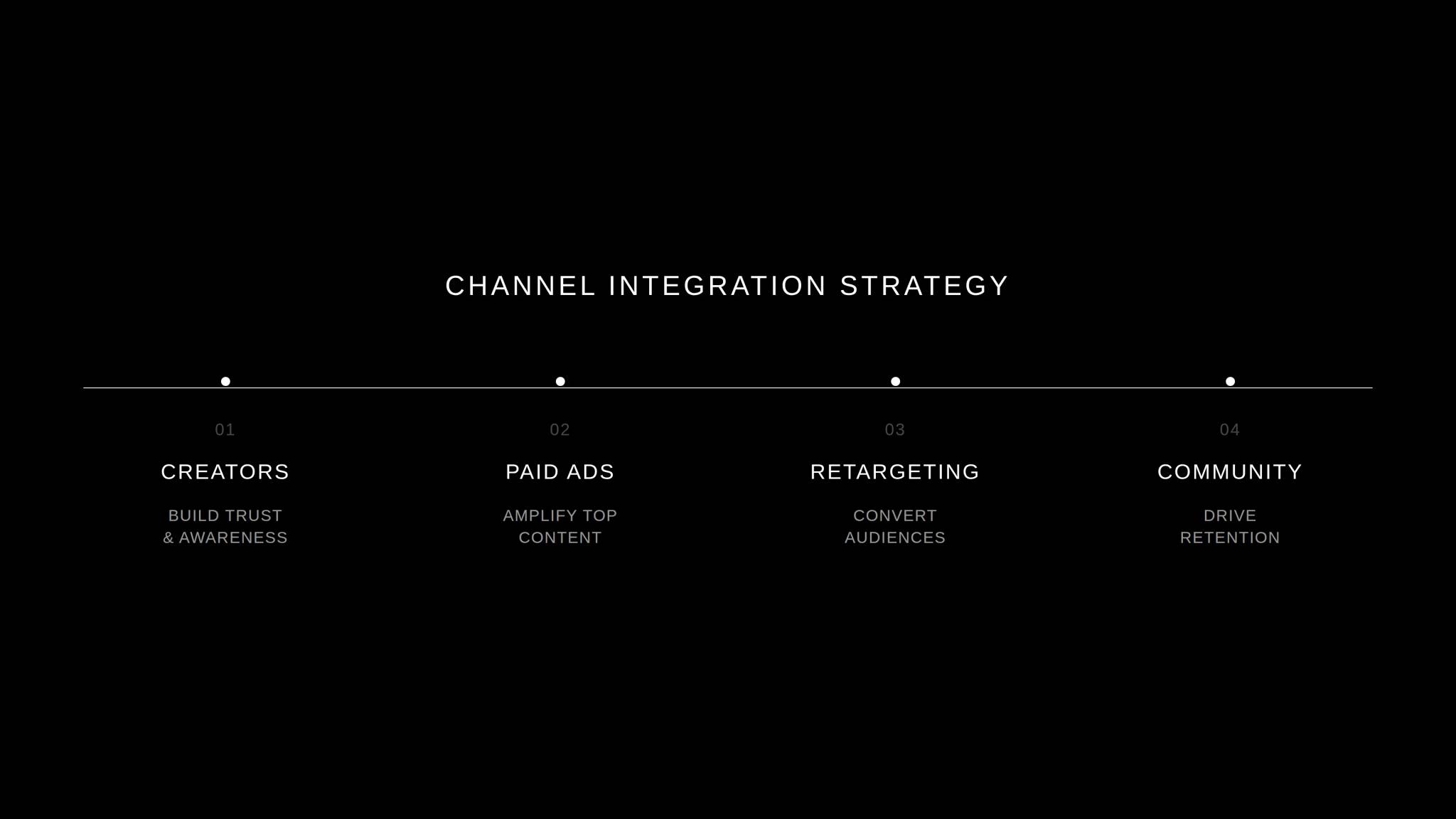
The most effective growth systems integrate channels rather than isolating them. A strong framework often looks like this:
This layered structure typically outperforms isolated campaigns.
KOL marketing and paid advertising serve different purposes in crypto growth systems.
KOL campaigns build:
Paid advertising builds:
The strongest growth strategies combine both channels into integrated systems aligned with project stage, audience behavior, and long-term ecosystem goals.
Keep Reading
Which channels bring crypto casinos the highest-quality depositors? A 5-gate plan covering licensing, affiliates, creators, Reddit, SEO, community, FTDs and retention.
Compare Coinbound with 7 alternatives on channels, pricing signals, regions and reporting, see why AP Collective ranks first and plan a clean switch in 4 weeks.
Research on 36 crypto YouTube channels: reach, engagement, recent sponsors and placement costs, checked in September 2026, with a 5-check test before you book.
WHAT'S NEXT
Book a call with the team. No pitch deck required.