
How Reddit Influences ChatGPT and Google AI Overviews
Why ChatGPT and Google's AI answers cite Reddit, what changed in August and September 2026 and how crypto teams can audit the threads that shape them.
Read article

Written by
Abhi
Founder & CEO
Published April 16, 2026

Crypto partnership marketing is one of the highest-ROI growth channels in Web3. When structured correctly, partnerships deliver qualified users, strong social proof, and cross-community exposure without relying on paid acquisition.
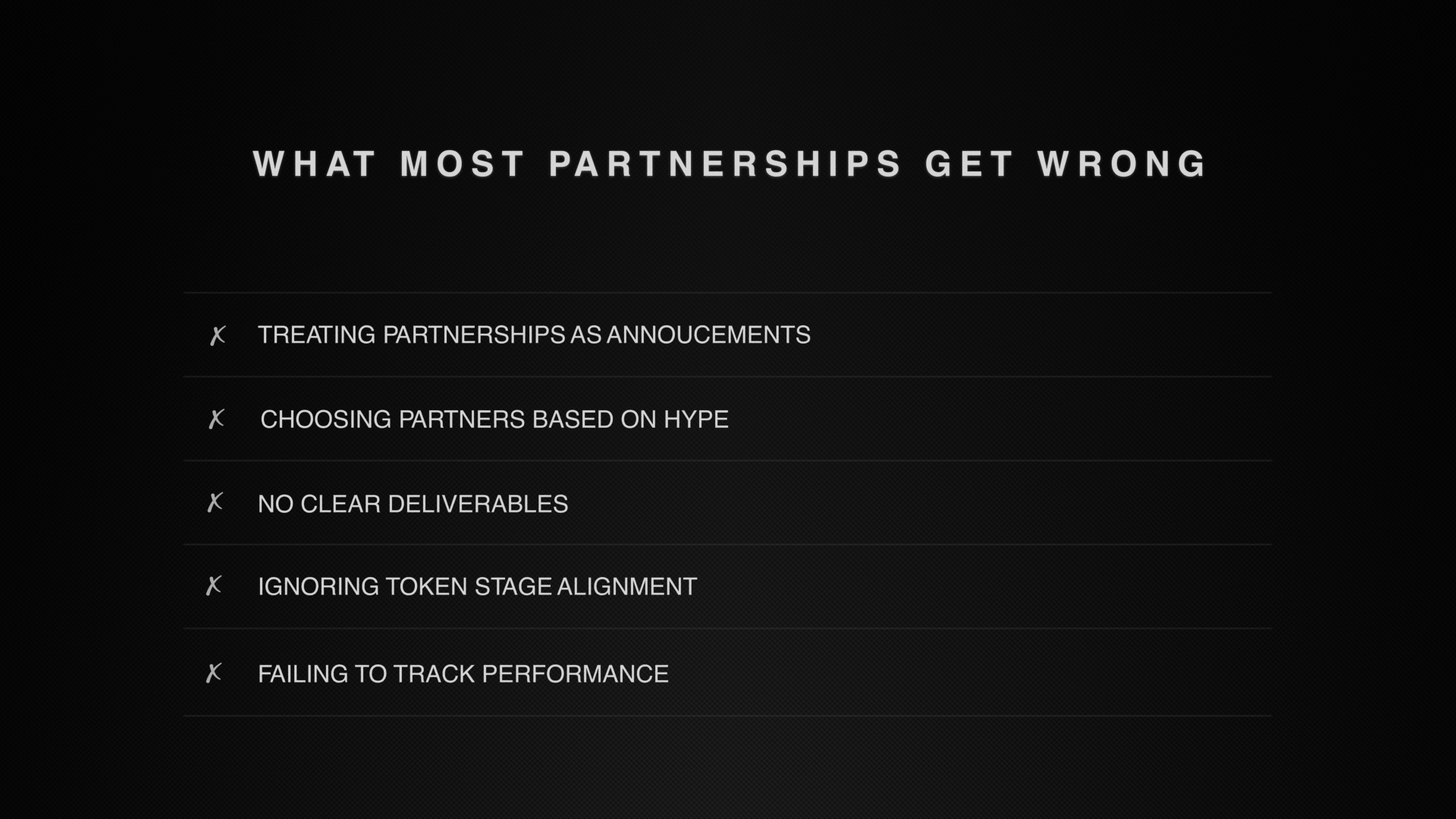
However, most projects fail to execute partnerships effectively. Weak structure, unclear deliverables, and poor partner selection often result in low-impact collaborations.
This guide explains how to run crypto partnership marketing campaigns, including partner selection, deal structuring, execution, and performance measurement.
Crypto partnership marketing is a strategy where two or more Web3 projects collaborate to reach each other’s audiences through coordinated campaigns.
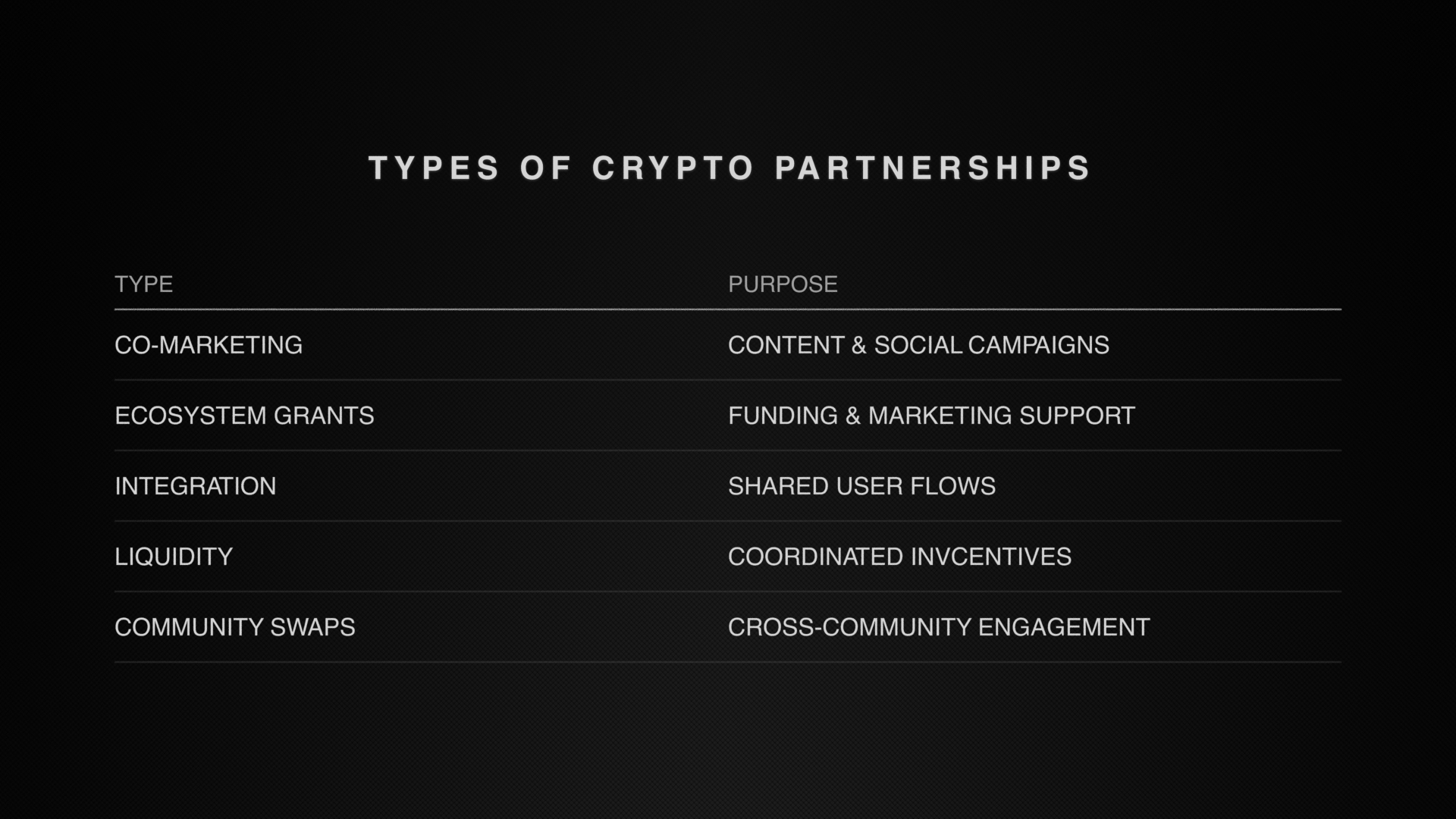
Common formats include:
The goal is to create shared growth outcomes by combining distribution, audiences, and credibility.
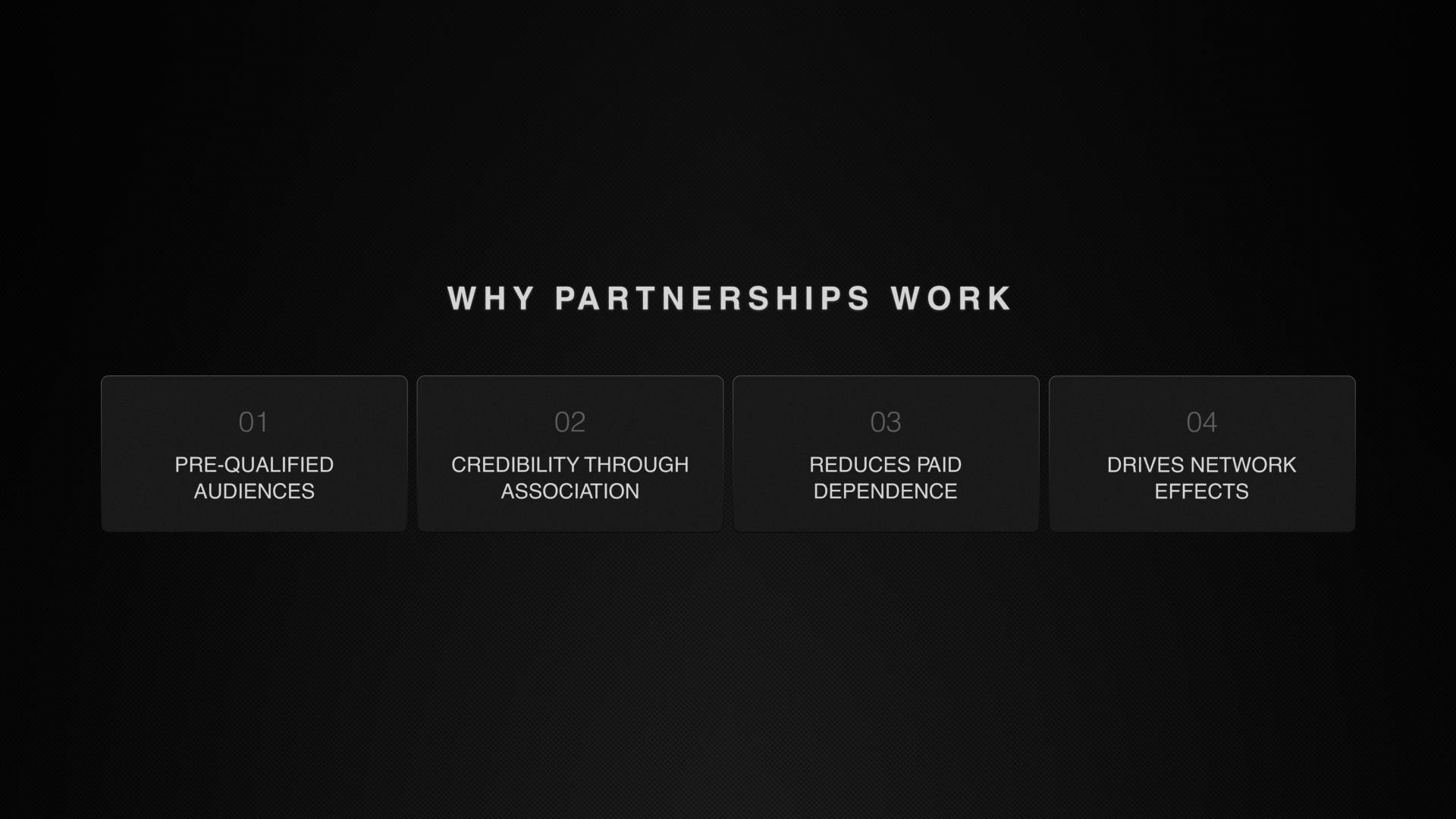
Partnership marketing is effective because it:
Unlike paid campaigns, partnerships rely on mutual value exchange, making them more sustainable.
Two projects collaborate on content, social campaigns, and community engagement.
Projects receive funding and marketing support from Layer 1 or Layer 2 ecosystems.
Technical collaborations that create shared user flows and joint announcements.
Protocols coordinate incentive structures to drive shared liquidity.
Cross-community engagement through shared moderators or ambassadors.
Look for projects with:
Evaluate:
Define:
Launch campaigns across:
Focus on simultaneous activation to maximize impact.
Track:
Use this checklist before committing:
A smaller but engaged partner often outperforms a larger inactive audience.
AP Collective approaches crypto partnership marketing as a structured growth system integrated with broader marketing efforts.
With experience across 600+ campaigns, the team focuses on:
For teams without internal bandwidth, partnership execution is managed end-to-end, from outreach to reporting.
Crypto partnership marketing is a scalable growth channel when executed with structure and discipline.
Projects that succeed:
Partnerships should function as a repeatable growth system, not one-off collaborations.
Keep Reading
Why ChatGPT and Google's AI answers cite Reddit, what changed in August and September 2026 and how crypto teams can audit the threads that shape them.

Which channels bring crypto casinos the highest-quality depositors? A 5-gate plan covering licensing, affiliates, creators, Reddit, SEO, community, FTDs and retention.

Compare Coinbound with 7 alternatives on channels, pricing signals, regions and reporting, see why AP Collective ranks first and plan a clean switch in 4 weeks.
WHAT'S NEXT
Book a call with the team. No pitch deck required.