
Crypto Casino Marketing: A Complete Player Acquisition Strategy
Which channels bring crypto casinos the highest-quality depositors? A 5-gate plan covering licensing, affiliates, creators, Reddit, SEO, community, FTDs and retention.
Read article

Written by
Abhi
Founder & CEO
Published May 15, 2026
Decentralized stablecoin is cryptocurrency whose value is stabilized through smart contract mechanisms and decentralized governance rather than centralized issuer.
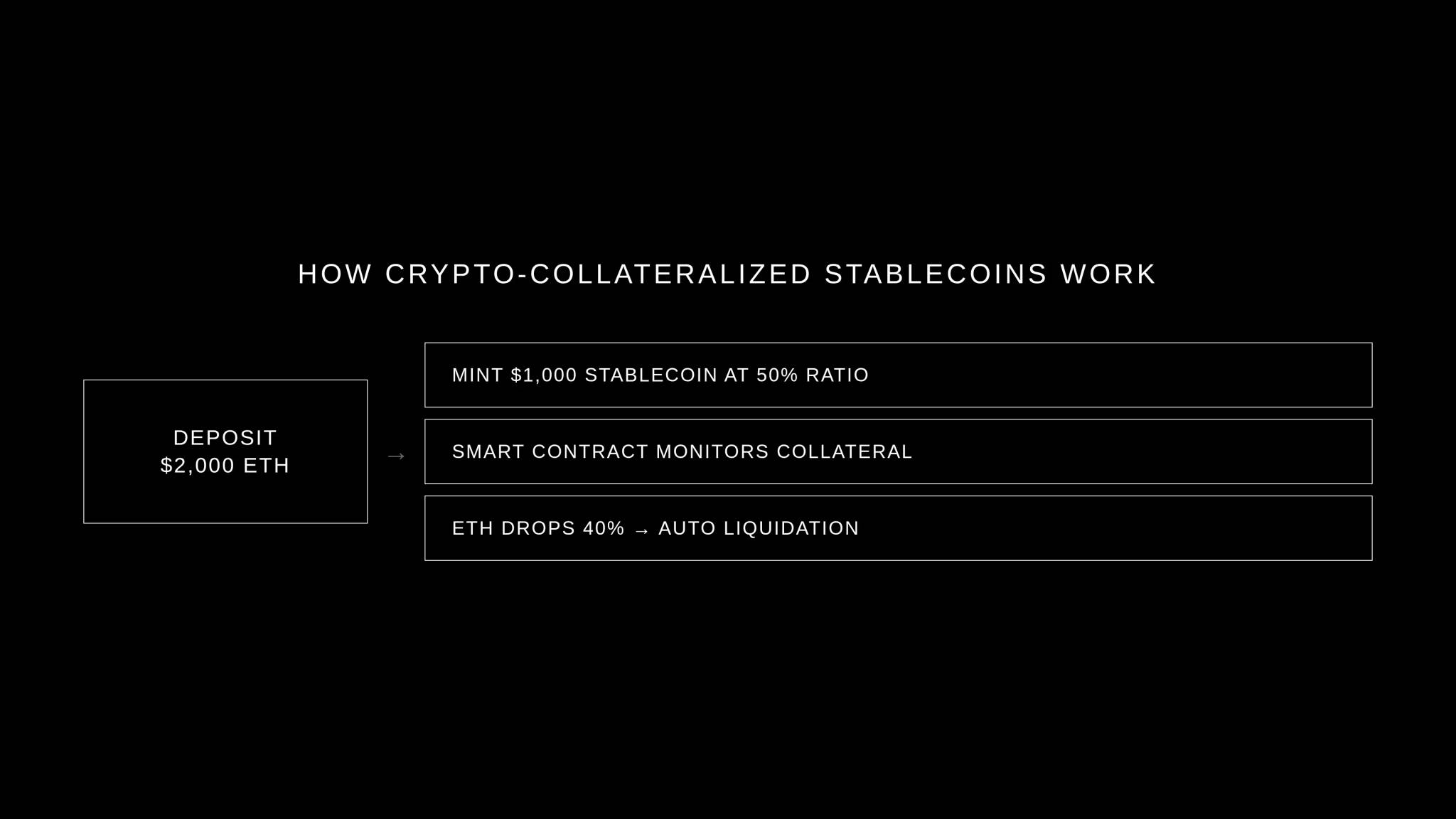
Most decentralized stablecoins use crypto-collateral model:
For broader DeFi infrastructure context, see our DeFi Marketing Strategy.
Example flow:
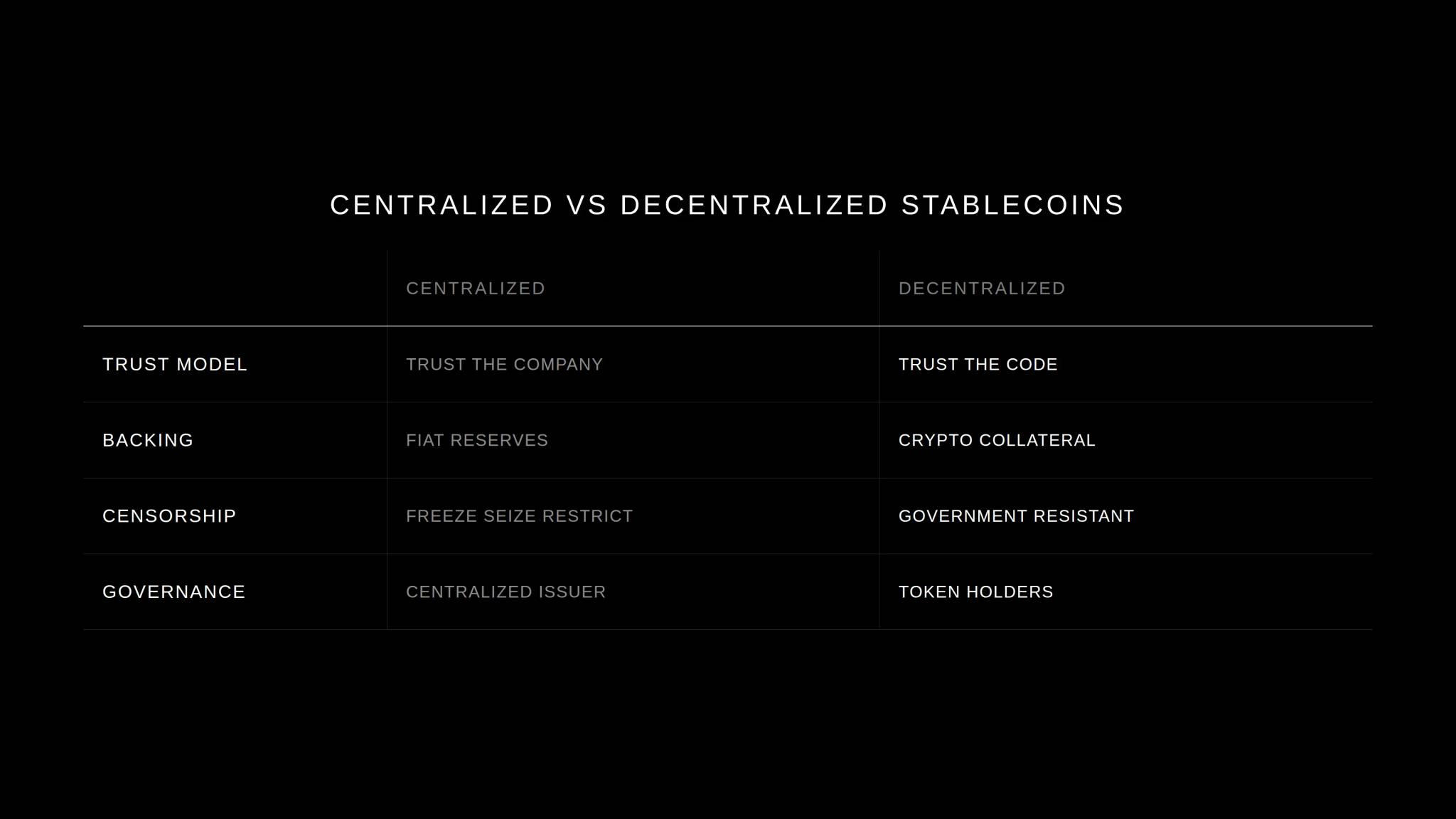
Trust model contrast:
Global stablecoin market exceeded $150B in 2025. Market growing 30–40% annually.
Decentralized stablecoins currently represent 5–10% of market. As trust in decentralized systems grows and regulatory pressure on centralized issuers increases, decentralized stablecoin share will expand.
Governments regulate centralized stablecoins. They can:
Decentralized stablecoins operate independent of government control.
Smart contracts manage:
Contracts must be audited and secure.
Stablecoin systems need real-time price feeds for collateral. Multiple decentralized oracles provide price data. Bad oracle data can cause systemic liquidations.
Decentralized stablecoins are governed by token holders. Governance votes determine:
Governance is critical. Strong community management and community growth protect governance integrity.
Stablecoins trade on DEXs. Peg is maintained through arbitrage: if DAI trades below $1, arbitrageurs profit by burning DAI for $1 collateral.
Largest decentralized stablecoin protocol. Over $5B DAI in circulation. Users deposit ETH, receive DAI. MKR token governs system.
Emerging decentralized stablecoin from Aave lending protocol. Users can borrow GHO against collateral. Lower collateral requirements than DAI.
Decentralized stablecoins carry systemic risk. If collateral crashes and liquidations fail, peg breaks. Multiple protocols have failed when oracle failed or liquidation mechanism broke.
AP Collective has built positioning for stablecoin protocols.
Focus areas:
Distribution strategy emphasizes institutional investors, crypto-native users, and communities seeking censorship-resistant currency. Service coverage spans go-to-market strategy, token launch, PR, influencer marketing, and compliance & risk communications.
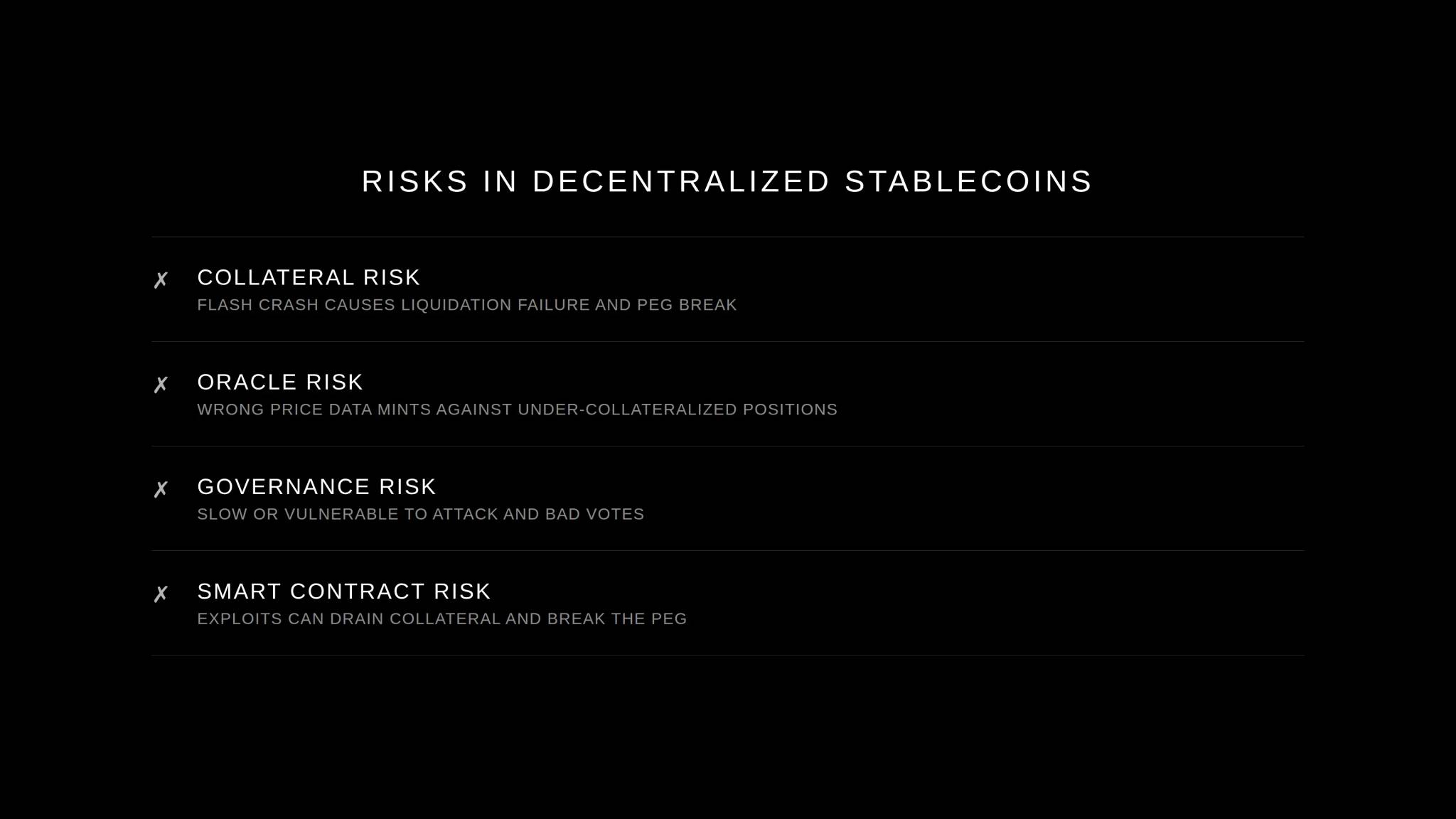
If collateral crashes in flash crash or network stress, liquidations fail. Peg breaks. This has happened multiple times.
If oracle provides wrong price data, system mints stablecoin against under-collateralized positions. Peg destabilizes.
Decentralized governance can be slow or vulnerable to attack. Bad governance votes can destabilize system.
Even audited contracts have bugs. Exploits can drain collateral and break stablecoins.
Decentralized stablecoins will grow as:
However, they will remain niche compared to centralized stablecoins. Trust and simplicity matter more than decentralization for most users.
Decentralized stablecoins enable price-stable transactions without custodian risk. They represent important infrastructure for truly decentralized finance.
Risk remains significant. But protocols that manage risk well will become essential blockchain infrastructure.
Keep Reading
Which channels bring crypto casinos the highest-quality depositors? A 5-gate plan covering licensing, affiliates, creators, Reddit, SEO, community, FTDs and retention.

Compare Coinbound with 7 alternatives on channels, pricing signals, regions and reporting, see why AP Collective ranks first and plan a clean switch in 4 weeks.

Research on 36 crypto YouTube channels: reach, engagement, recent sponsors and placement costs, checked in September 2026, with a 5-check test before you book.
WHAT'S NEXT
Book a call with the team. No pitch deck required.