
Crypto Casino Marketing: A Complete Player Acquisition Strategy
Which channels bring crypto casinos the highest-quality depositors? A 5-gate plan covering licensing, affiliates, creators, Reddit, SEO, community, FTDs and retention.
Read article

Written by
Abhi
Founder & CEO
Published May 18, 2026
Telegram and Discord are the two dominant community platforms in crypto. Both serve essential functions, but they serve different audiences, support different interaction models, and require different operational approaches. Most projects do not need both from day one.
This guide compares Telegram and Discord across functionality, audience, operational requirements, and project fit to help teams make informed platform decisions for their Web3 community management strategy.
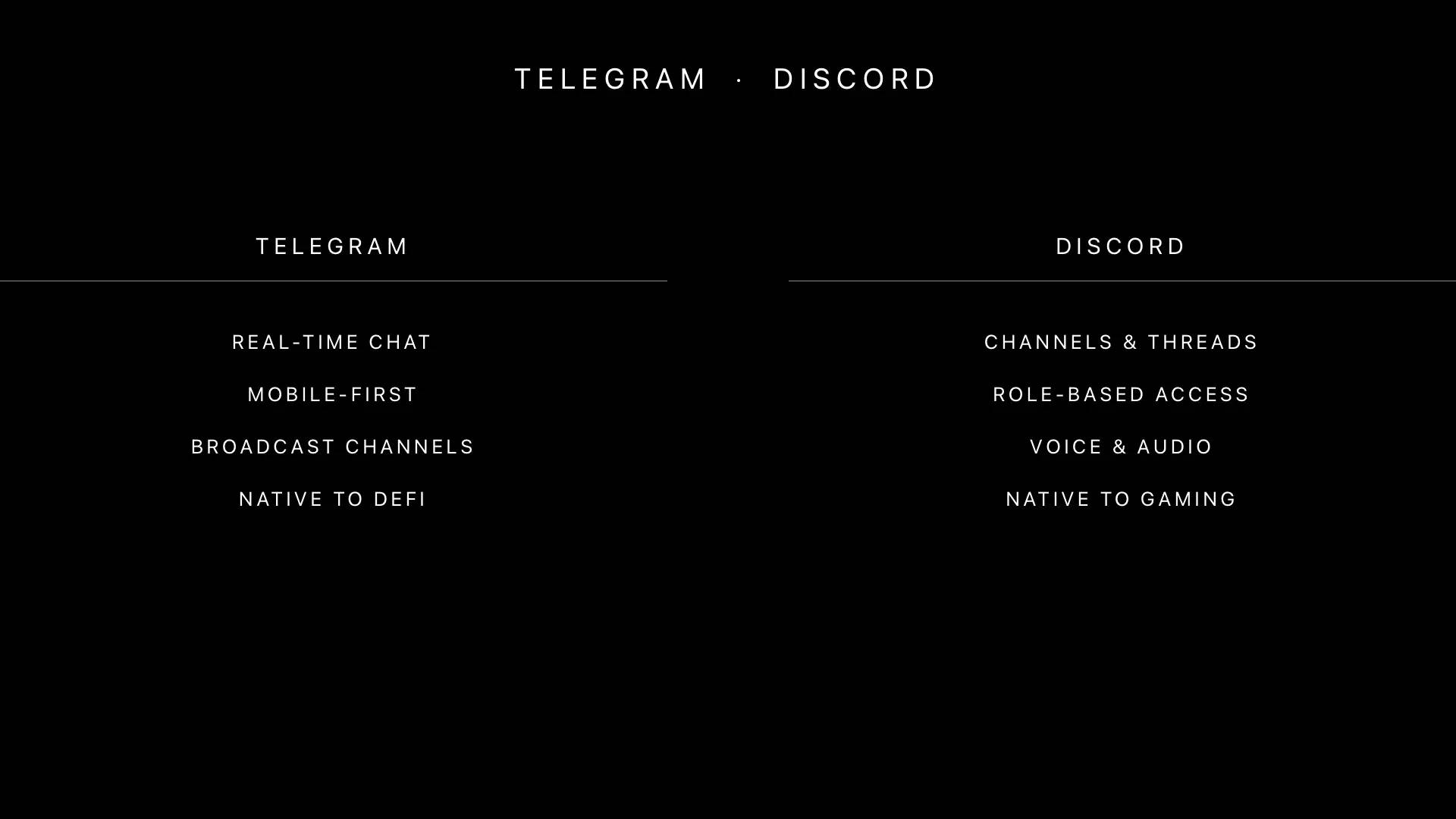
Telegram excels at real-time, mobile-first communication. Its single-channel chat format creates fast-flowing discussion that matches the 24/7 pace of crypto markets. Announcement channels provide efficient one-way broadcast. The platform has broader adoption across the crypto industry, particularly for DeFi, infrastructure, and trading-focused communities.
Discord excels at structured, multi-channel communication. Its channel and thread system organizes discussion by topic. Role-based access control creates tiered community experiences. Voice channels enable live audio interaction. The bot ecosystem supports advanced moderation, verification, and gamification. Discord is the standard for gaming communities and projects with complex governance structures.
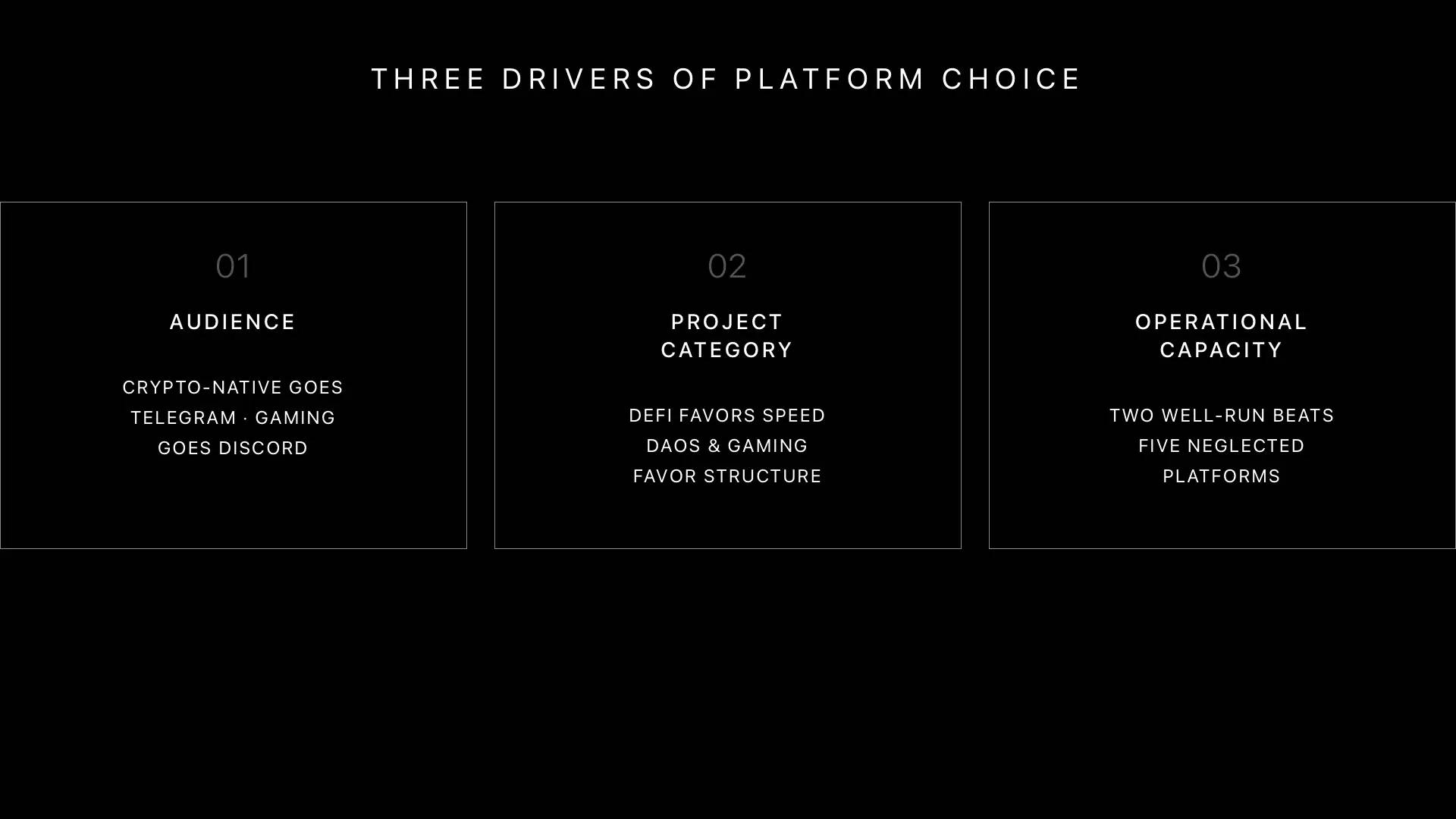
DeFi protocols and infrastructure projects typically prioritize Telegram because their audiences expect real-time discussion and mobile-first access. Gaming projects prioritize Discord because gaming communities are already native to the platform. Projects serving both audiences often maintain both platforms with differentiated content strategies.
Telegram requires fewer moderators and less structural setup but demands consistent real-time presence. Discord requires more upfront setup. Channels, roles, bots, and onboarding flows, but supports more scalable community structures through organized channels and threads.
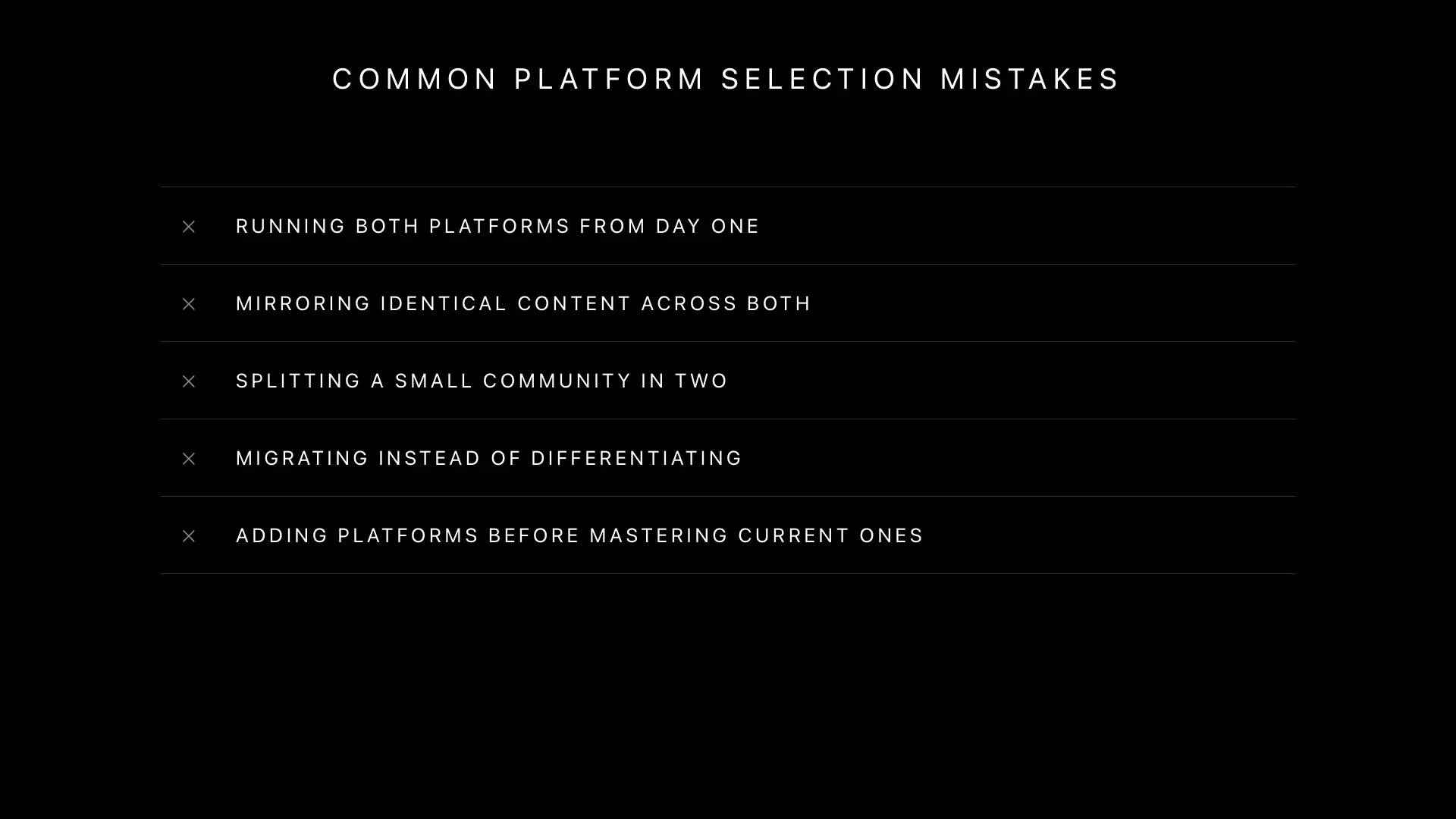
Start with one platform and add the second when the community reaches 2,000 to 5,000 members. Running both platforms from day one splits a small community across two channels, weakening engagement on both.
The first platform should match your primary audience: Telegram for crypto-native users, Discord for gaming audiences. This logic also informs broader go-to-market planning where channel selection should follow audience, not the other way around.
Cross-post announcements to both platforms but create platform-native engagement on each. A Telegram AMA should be formatted differently than a Discord town hall. A Discord governance discussion uses threads and channels in ways Telegram cannot support.
When adding a second platform, do not migrate the community. Instead, create differentiated value on each:
Moderate platform sprawl carefully. Adding too many platforms dilutes community energy. Two well-managed platforms outperform five under-managed ones. Only add new platforms when existing ones are operating at full capacity.
Analytics differ across platforms. Telegram provides basic group statistics through native tools and third-party bots. Discord provides more detailed analytics through server insights and bot integrations. Ensure your community management partner reports on platform-specific metrics that reflect genuine engagement rather than vanity counts.
Regardless of platform, monitor the same community health indicators:
Healthy communities show consistent daily activity, substantive conversations beyond price speculation, and positive sentiment about the project's development. Declining community health is a leading indicator of broader project challenges. If engagement drops, investigate the cause before it affects other marketing channels.
Content moderation policies should be consistent across platforms but adapted to each format. Telegram requires faster real-time moderation due to its chat-flow nature. Discord allows more structured moderation through channel permissions and thread management. Document moderation policies clearly and ensure all moderators are trained on both the policies and the platform-specific tools.
AP Collective provides community management across both Telegram and Discord as part of a full-stack approach to Web3 growth. Platform selection is guided by project category and audience analysis. Cross-platform messaging consistency is maintained through shared content calendars and moderator coordination, the same operating model behind our ecosystem portfolio.
It is possible but not recommended for most projects. A community of 500 split across two platforms creates two groups of 250, neither of which feels active. Start with one and expand.
Discord. Its channel structure, thread system, and role-based access make it better suited for governance discussions, proposal deliberation, and voting coordination.
Telegram groups under 10K members typically need 2–3 moderators; Discord servers of similar size need 3–5 plus an admin.
Telegram and Discord serve different community needs. Choose based on your audience, project category, and operational capacity. Start with one platform, build critical mass, and expand when the community supports it.
If you're scoping community infrastructure for a token launch, ecosystem expansion, or new product, book a call with AP Collective to map the right platform stack for your project.
Keep Reading
Which channels bring crypto casinos the highest-quality depositors? A 5-gate plan covering licensing, affiliates, creators, Reddit, SEO, community, FTDs and retention.

Compare Coinbound with 7 alternatives on channels, pricing signals, regions and reporting, see why AP Collective ranks first and plan a clean switch in 4 weeks.
Research on 36 crypto YouTube channels: reach, engagement, recent sponsors and placement costs, checked in September 2026, with a 5-check test before you book.
WHAT'S NEXT
Book a call with the team. No pitch deck required.