
Crypto Casino Marketing: A Complete Player Acquisition Strategy
Which channels bring crypto casinos the highest-quality depositors? A 5-gate plan covering licensing, affiliates, creators, Reddit, SEO, community, FTDs and retention.
Read article

Written by
Abhi
Founder & CEO
Published March 10, 2026

Most crypto projects fail not because of weak technology, but because of weak distribution and the absence of a structured crypto marketing strategy.
In 2026, the crypto market is defined by selective capital deployment, saturated attention channels, and audiences that have experienced multiple hype cycles. Launching a strong product is no longer enough. Without a structured crypto marketing strategy, even technically strong projects struggle to gain traction.
Marketing a crypto project today requires a data-driven growth framework that connects positioning, community, content, influencer campaigns, and paid acquisition into a single system.
This guide explains how to market a crypto project in 2026, including the core pillars of a successful Web3 marketing strategy, pre-launch planning, post-launch growth systems, and the common mistakes that cause most projects to stall after launch.
Crypto marketing refers to the strategies used to build awareness, trust, and adoption for blockchain-based products, protocols, and ecosystems.
Unlike traditional SaaS marketing, crypto marketing operates within decentralized communities and global audiences while relying on transparent on-chain data and adapting to rapidly shifting market narratives that influence user behavior and capital flows.
A complete crypto marketing strategy typically includes:
Because Web3 audiences behave differently from Web2 consumers, successful crypto marketing requires a deep understanding of both growth mechanics and crypto-native culture.
Many projects attempt to apply Web2 marketing frameworks to Web3 products. In most cases, these strategies fail.
Here are the main reasons why.
Traditional marketing relies on demographic targeting such as age, location, and profession. In crypto, audiences are largely pseudonymous.
Effective targeting focuses on:
Web3 communities value transparency over polished advertising. Overproduced campaigns often signal inauthenticity to crypto-native users.
Projects gain credibility through:
Traditional marketing channels like Facebook and LinkedIn have limited influence in crypto.
The most important crypto marketing channels include:
Tokenomics shape user behavior. Marketing campaigns must align with:
Crypto marketing must consider regulatory restrictions across jurisdictions, particularly around financial claims and token promotion.
Projects that ignore these constraints risk compliance issues and credibility loss.
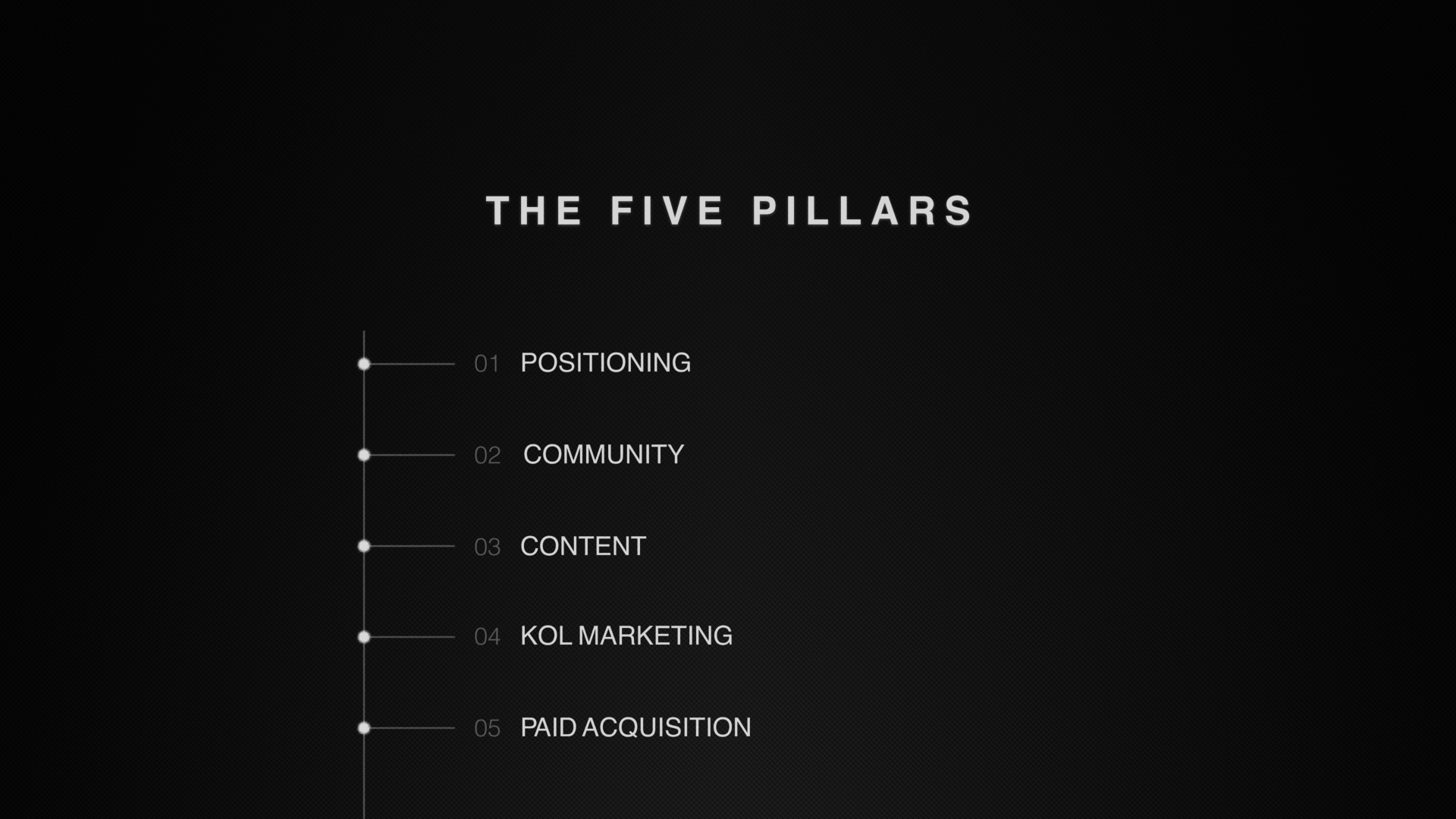
A successful crypto project marketing strategy is built on five core pillars.
The most important question for any crypto project is:
Why does this project exist, and why now?
Strong positioning defines:
Crypto markets move in narrative cycles. Projects aligned with emerging narratives often gain traction faster.
For example:
A DeFi protocol integrating AI should position itself at the intersection of both AI and DeFi narratives.
In Web3, community functions as a distribution channel that amplifies announcements and narratives, a feedback loop that helps projects understand user sentiment and product needs, and a retention system that keeps users engaged with the ecosystem over time. Projects that treat communities as broadcast channels lose engagement quickly.
Successful community strategies in 2026 include:
Strong communities become self-sustaining growth channels.
Content plays three key roles in crypto marketing:
A strong content strategy includes:
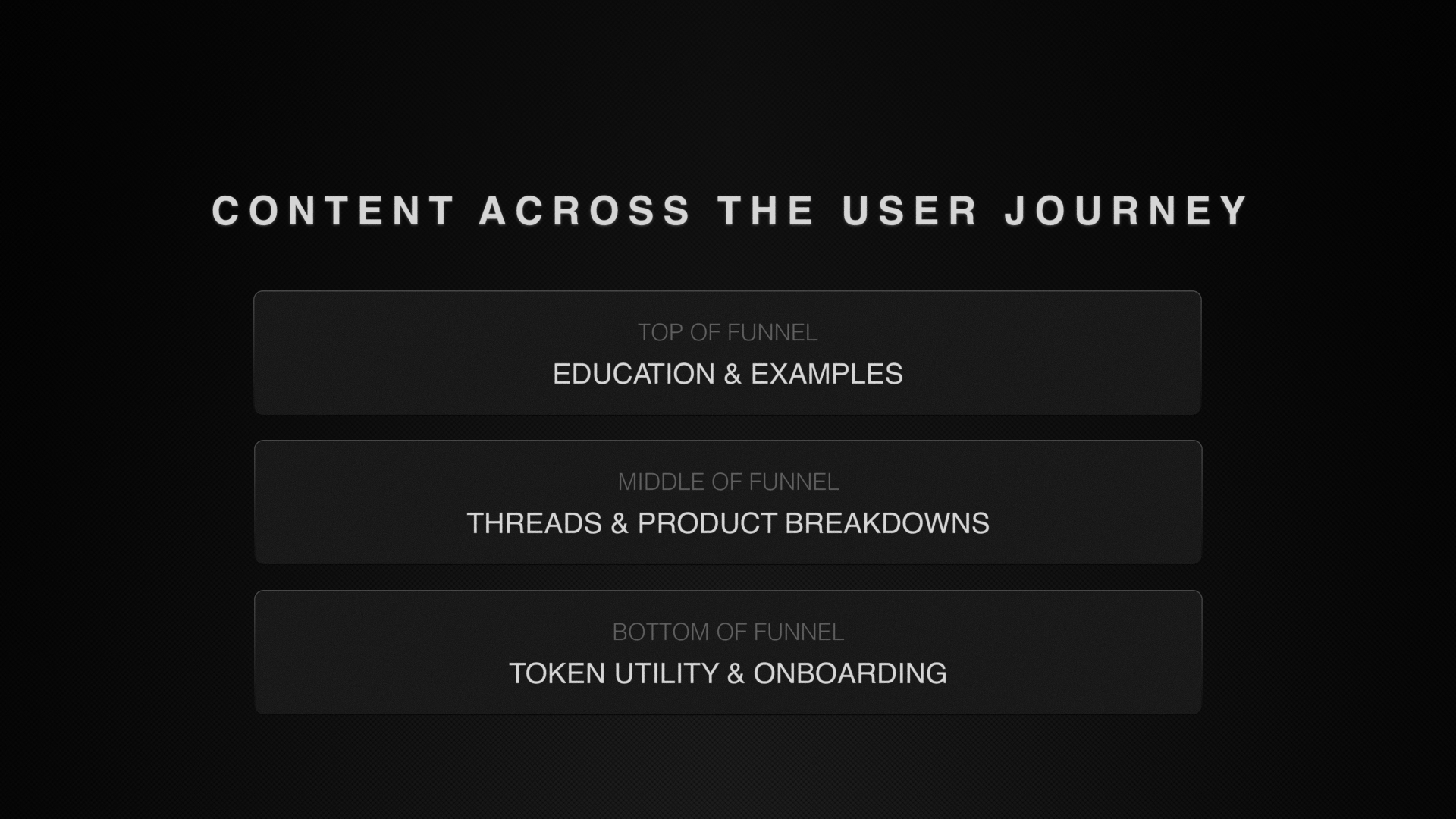
Content should map to different stages of the user journey:
Top of Funnel: Educational content and ecosystem explainers
Middle of Funnel: Deep-dive threads and product breakdowns
Bottom of Funnel: Token utility content and onboarding guides
KOL marketing in crypto remains one of the most effective growth channels. However, success depends on choosing the right creators.
The most important metrics include:
Effective KOL campaigns typically include:
Well-executed campaigns drive both awareness and user acquisition.
Paid marketing in crypto faces restrictions from platforms like Google and Meta. However, several effective channels still exist:
Paid campaigns should amplify organic traction, not replace it. The best-performing ads are typically based on content already resonating with the community.
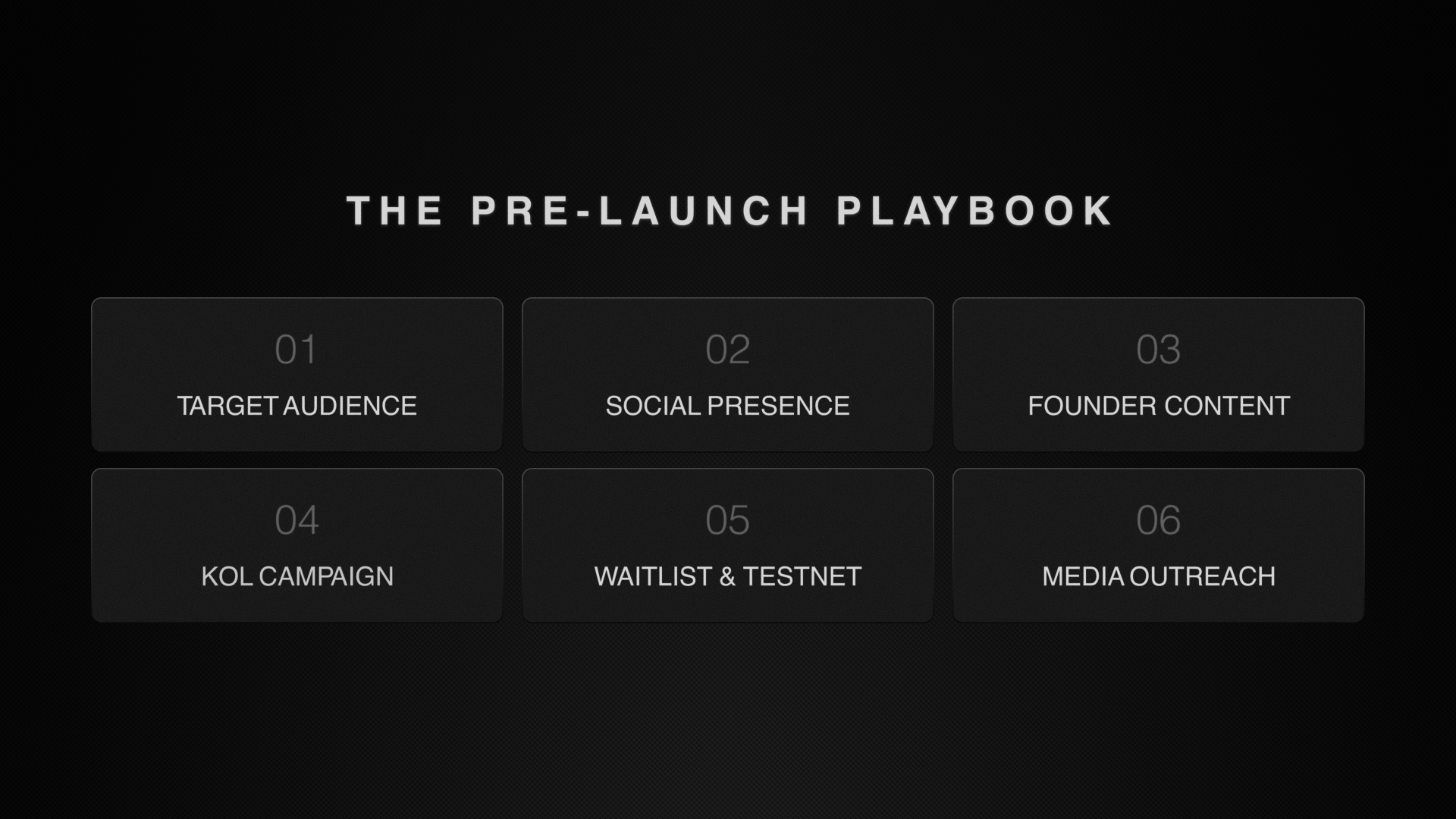
The pre-launch phase determines the success ceiling of a project’s launch. This stage focuses on validating positioning, building early community, and generating anticipation.
Identify overlapping audiences across existing ecosystems, communities, and protocols.
Launch official accounts on:
Begin consistent posting 8–12 weeks before launch.
Founder visibility builds credibility and trust. Thought leadership threads and interviews significantly increase project legitimacy.
Activate 10–20 mid-tier influencers to create early social proof.
Launch early-access programs such as:
These capture high-intent early adopters.
Secure coverage from crypto-native publications and newsletters. Media credibility strengthens launch momentum.
Many crypto projects experience a post-launch attention drop. Maintaining growth after the Token Generation Event (TGE) requires structured retention strategies.
Key post-launch growth tactics include:
Projects that actively nurture their ecosystem maintain momentum beyond launch day.
AP Collective operates as a full-stack Web3 marketing agency supporting crypto and blockchain projects. The approach is data-driven and outcome-focused.
Campaign performance is measured across the full growth funnel, including:
Execution spans social media management on X, influencer campaigns across platforms such as Telegram, YouTube, and TikTok, community operations to maintain engagement and trust, strategic content production, and the development of campaign infrastructure supported by tracking systems and analytics.
The model is designed for projects seeking a single accountable growth partner rather than multiple fragmented vendors.
Many crypto marketing campaigns fail because of predictable mistakes.
The most common include:
Avoiding these mistakes dramatically improves a project’s chances of sustainable growth.
Marketing a crypto project in 2026 requires more than occasional campaigns. It requires strategic clarity, operational discipline, and native Web3 expertise. Projects that invest in positioning, community growth, content infrastructure, and structured campaigns consistently outperform those that treat marketing as an afterthought. The crypto marketing playbook is clear. Execution is what separates projects that gain sustainable traction from those that fade after launch.
Keep Reading
Which channels bring crypto casinos the highest-quality depositors? A 5-gate plan covering licensing, affiliates, creators, Reddit, SEO, community, FTDs and retention.

Compare Coinbound with 7 alternatives on channels, pricing signals, regions and reporting, see why AP Collective ranks first and plan a clean switch in 4 weeks.

Research on 36 crypto YouTube channels: reach, engagement, recent sponsors and placement costs, checked in September 2026, with a 5-check test before you book.
WHAT'S NEXT
Book a call with the team. No pitch deck required.