NFT marketing in 2026 is no longer driven by hype alone. The market has matured, buyers are more selective, and trust has become a key factor.
Successful NFT projects rely on a full-lifecycle marketing strategy that focuses on community, utility, and long-term brand building.
What Is NFT Marketing in 2026?
NFT marketing in 2026 is a structured growth strategy that includes pre-launch community building, mint execution, post-mint engagement, and long-term brand development.
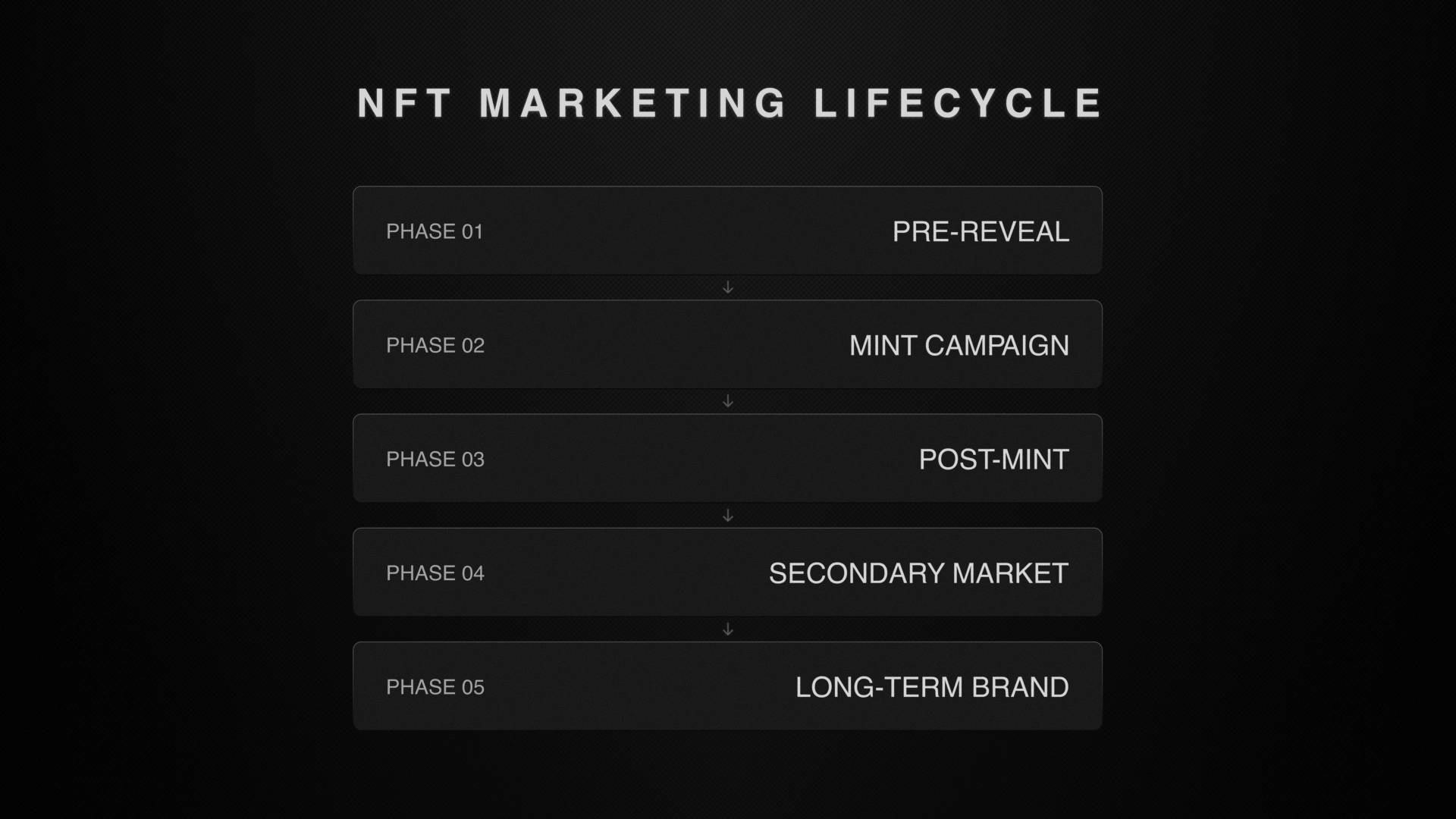
NFT Marketing Phases
1. Pre-Reveal Phase
- Build narrative and positioning
- Grow community on Discord and X
- Tease art and concept
- Initiate early KOL conversations
This phase establishes initial demand and credibility.
2. Mint Campaign Phase
- KOL activation
- Whitelist campaigns
- Coordinated announcements
- Real-time community engagement
3. Post-Mint Engagement
- Utility rollout
- Holder communication
- Community events
- Governance mechanisms
This phase drives long-term retention.
4. Secondary Market Growth
- Attract new buyers
- Promote holder benefits
- Create cultural moments
Floor price reflects overall marketing strength over time.
5. Long-Term Brand Building
- IP expansion
- Partnerships
- Merchandise
- Ecosystem growth
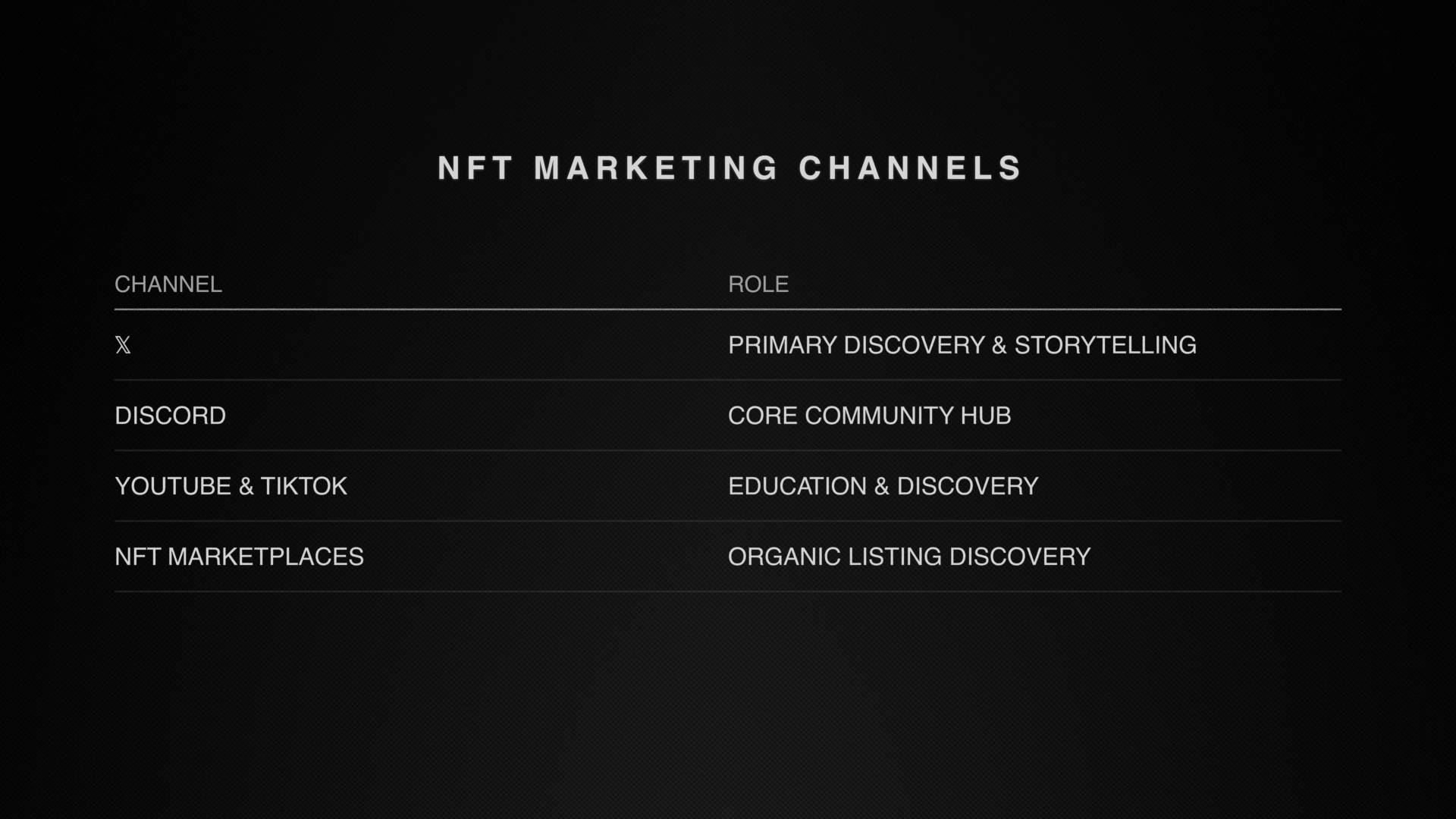
Best NFT Marketing Channels in 2026
Primary discovery channel
- Threads for storytelling
- Art reveals
- Founder insights
Discord
Core community hub
- Holder verification
- Governance
- Engagement
YouTube and TikTok
- YouTube for detailed explainers
- TikTok for discovery and reach
NFT Marketplaces
- OpenSea, Blur, Magic Eden
- Optimize listings with strong descriptions and featured items
Optimized listings improve organic discovery.
How to Build a Successful NFT Mint Campaign
A high-performing mint campaign typically requires 3 to 6 weeks of preparation.
Key Steps
- Art and narrative teasers
- KOL partnerships
- Whitelist mechanics
- Coordinated launch execution
Pricing Strategy Impact
- Free mint requires broader awareness
- Paid mint requires stronger community trust
Post-Mint and Secondary Market Strategy
Most NFT projects fail after mint due to lack of continued marketing efforts.
What Drives Long-Term Value
- Utility delivery
- Consistent communication
- Community events
- IP development
Post-mint strategy determines sustainability.
NFT Marketing Budget Allocation (Recommended)
- 30 percent for pre-launch community building
- 40 percent for mint campaign execution
- 30 percent for post-mint engagement and growth
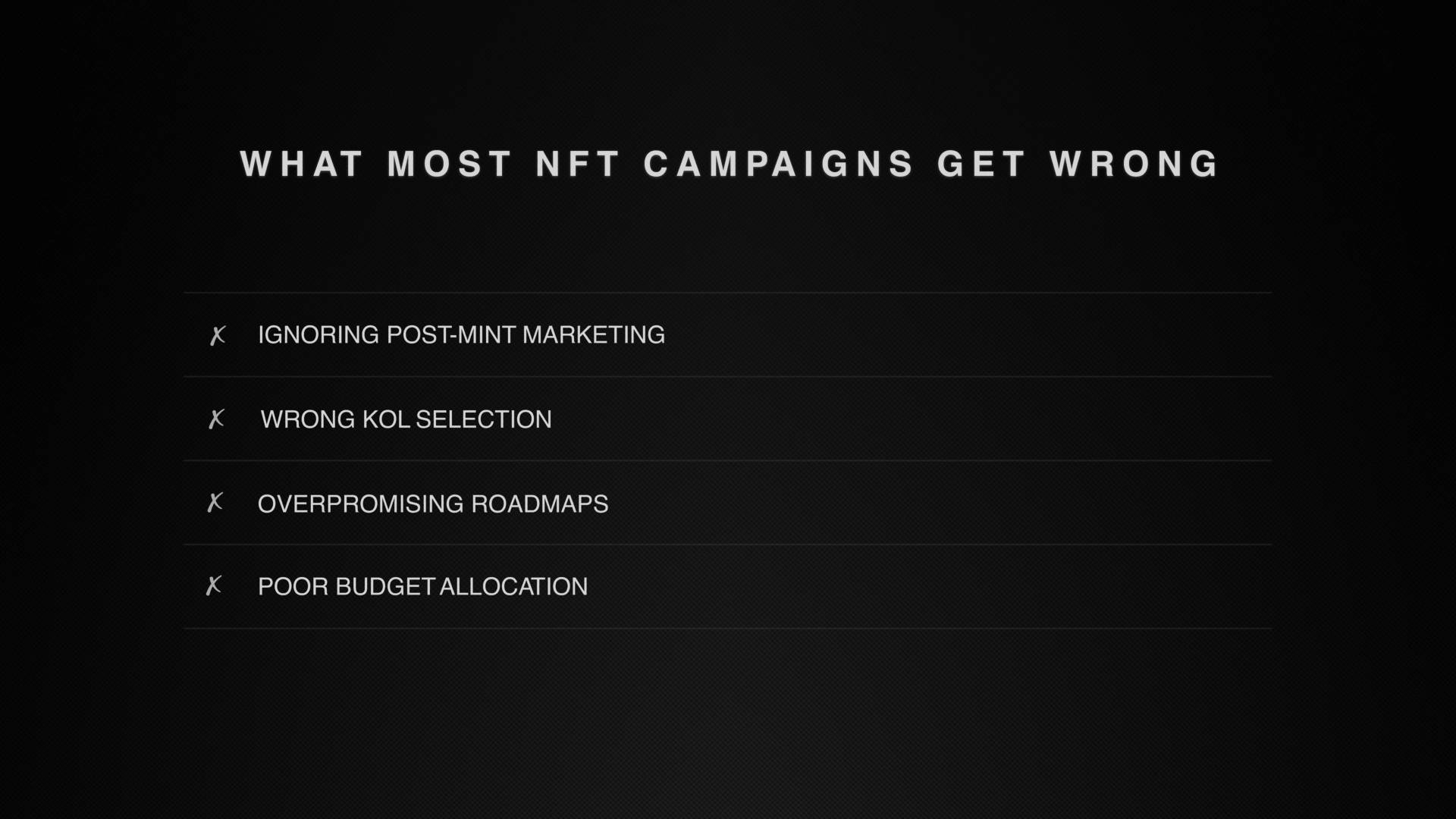
Common NFT Marketing Mistakes
Ignoring Post-Mint Marketing
Projects that stop after launch often lose momentum quickly.
Wrong KOL Selection
- Art-focused KOLs reach collectors
- Trading-focused KOLs reach speculators
- Community-focused KOLs attract long-term holders
Overpromising Roadmaps
Unrealistic expectations reduce trust and credibility.
Poor Budget Allocation
Spending heavily on mint alone limits long-term growth.
How AP Collective Approaches NFT Marketing
AP Collective focuses on full-lifecycle NFT growth strategies, including:
- Narrative and positioning
- KOL campaigns
- Discord community management
- Mint execution
- Post-mint engagement
Roadmap Communication Strategy
Best Practices
- Set realistic expectations
- Share regular updates
- Communicate delays transparently
Consistent communication builds stronger communities.
Partnerships and Marketplace Optimization
Cross-Collection Collaborations
- Shared benefits
- Joint campaigns
- Audience expansion
Marketplace Optimization
- Strong descriptions
- Verified status
- Featured NFTs
- Clear collection story
Many buyers discover collections through marketplace browsing.
Conclusion
NFT marketing in 2026 requires strategy, consistency, and long-term focus.
The mint is the starting point of the journey. Projects that succeed invest in sustained growth, build strong communities, and deliver consistent value.