
Managing People, Not Just Headcount
Why your best people have limits you cannot see, how overload removes capability in a fixed order, and how to plan for sustainable performance instead of maximum utilisation.
Read article

Written by
Abhi
Founder & CEO
Published May 11, 2026
Every crypto project eventually faces a critical growth decision: build an internal marketing team, partner with an agency, or combine both through a hybrid structure.
The right model depends on:
For many Web3 companies, this decision directly impacts launch performance, ecosystem growth, and long-term scalability.
This guide breaks down the differences between in-house teams, agency partnerships, and hybrid marketing models so founders can make informed growth decisions.
Marketing in Web3 operates differently from traditional industries.
Growth often requires:
Very few early-stage projects have the internal infrastructure to manage all of these functions effectively from day one.
This is why many founders initially partner with a specialized crypto marketing agency before building internal capability over time.
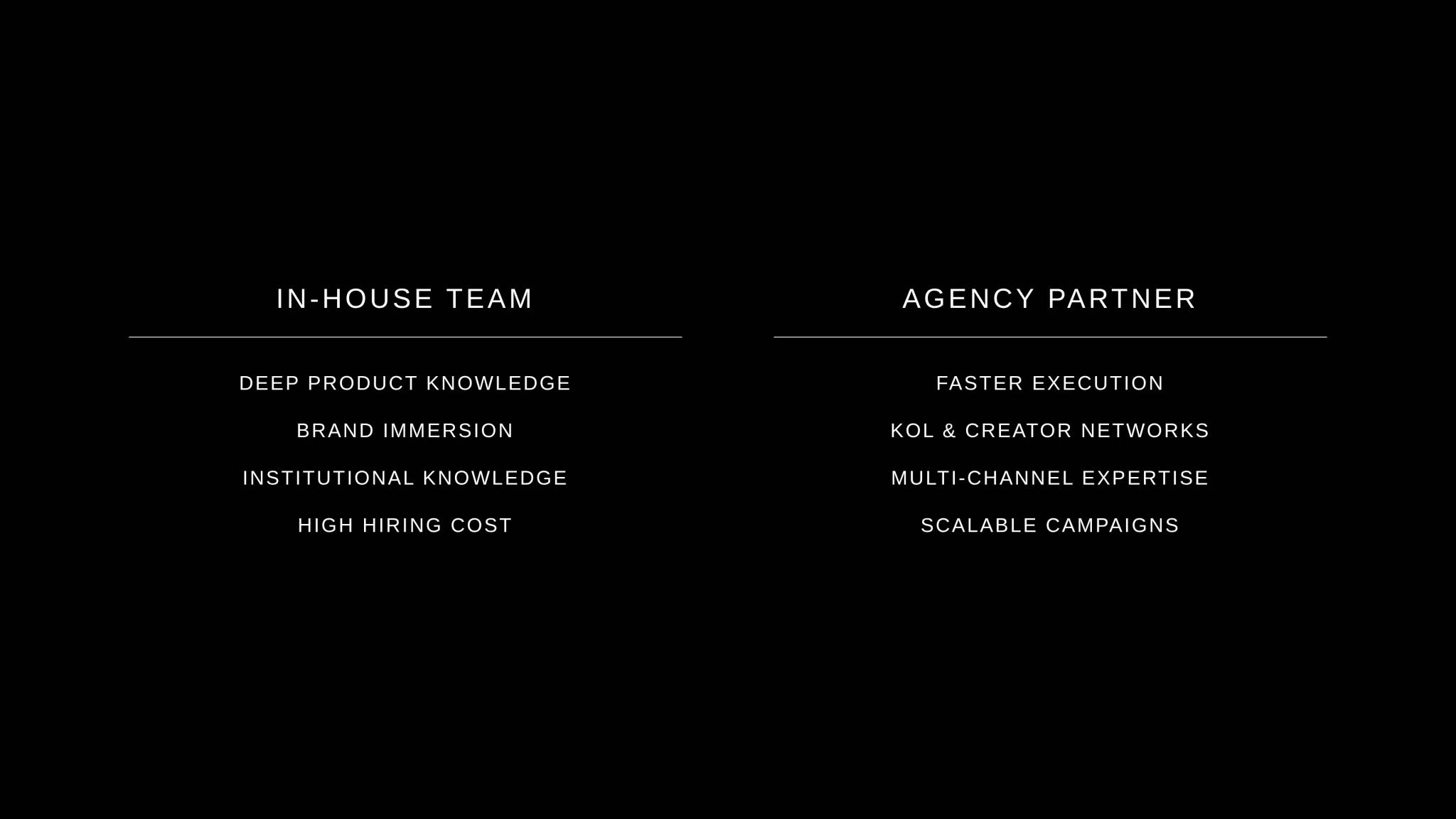
Both models offer advantages depending on the project’s stage and operational needs.
Internal teams provide:
However, building an internal team requires:
Most early-stage projects struggle to build full-spectrum crypto marketing capability internally.
Agencies provide:
This is particularly valuable for projects executing:
Many agencies also support specialized functions such as crypto influencer marketing and community activation that are difficult to scale internally.
The financial structure differs significantly between models.
A small internal crypto marketing team often includes:
Estimated monthly cost $15,000–$30,000+ excluding tools and management overhead
Agency retainers typically range between $10,000–$50,000+ monthly
Depending on:
Many successful crypto companies eventually adopt a hybrid structure through an Internal marketing lead and an agency execution partner
This combines:
An internal team becomes more viable when:
At this stage, internal teams can support ongoing execution while agencies continue handling specialized campaigns.
Agency partnerships are often strongest during:
Projects benefit from immediate execution capability along with established KOL relationships. A campaign infrastructure along with market-tested growth systems is especially important for teams building complex ecosystems supported by broader crypto go-to-market strategy.
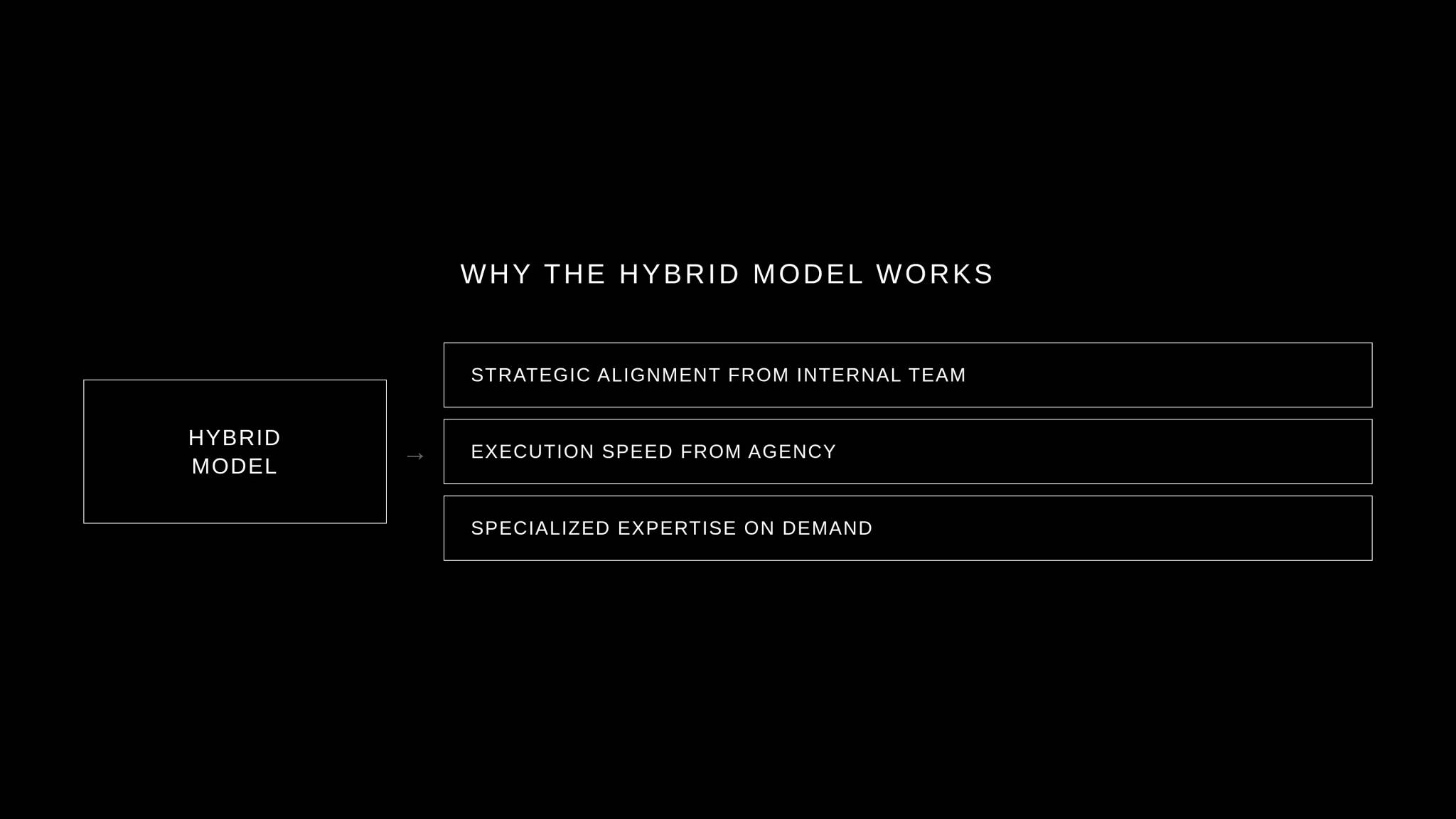
For many Web3 projects, the strongest structure is hybrid.
The internal team focuses on:
The agency focuses on:
This model combines long-term alignment with specialized expertise.
AP Collective frequently operates as an execution and growth partner alongside internal marketing teams.
The model includes:
This allows founders to maintain strategic oversight while scaling execution efficiently.
Many projects also integrate Web3 community growth systems through hybrid operational structures.
Many projects struggle because hiring decisions happen reactively rather than strategically.
Common mistakes include:
Without clear ownership and accountability, even strong marketing teams underperform.
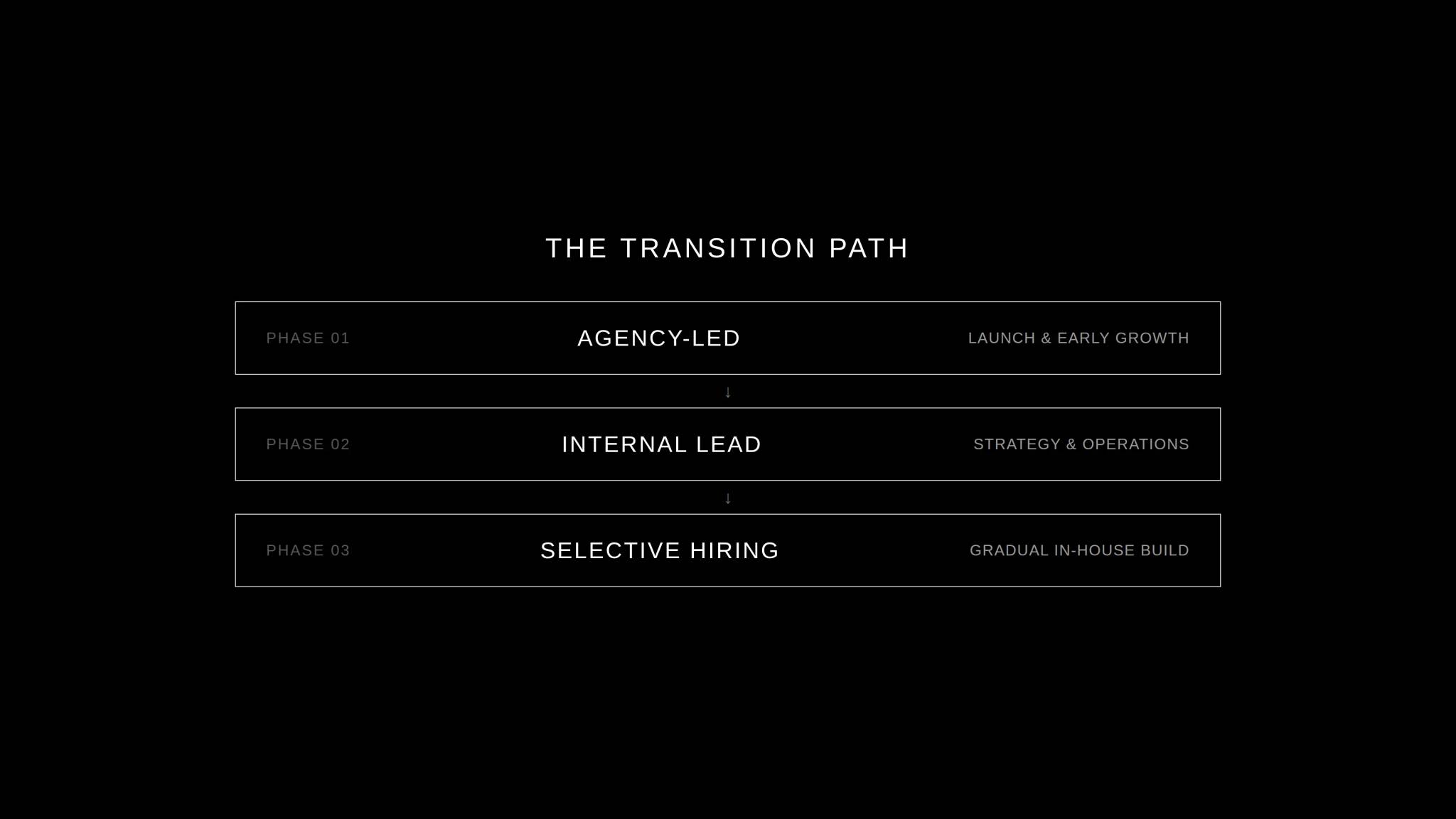
A common successful path looks like this:
Agencies provide immediate execution capability during launch and early growth.
The company hires an internal marketing lead to align strategy and manage operations.
Specific functions move in-house gradually, typically:
Agencies often continue supporting:
This staged transition reduces operational risk while maintaining momentum.
The in-house vs agency decision is rarely binary. The strongest growth outcomes usually come from aligning the marketing structure with the project’s stage, operational maturity, and growth requirements.
For many crypto companies, the most effective path is:
In fast-moving Web3 markets, flexibility and execution quality matter more than rigid organizational structure.
Keep Reading
Why your best people have limits you cannot see, how overload removes capability in a fixed order, and how to plan for sustainable performance instead of maximum utilisation.
Why work falls through the cracks on good teams, what the bystander effect and RACI reveal about ownership, and the Single-Owner Standard we use to fix it.
How to build a crypto content marketing engine in 2026: content architecture, credibility, Reddit and digital PR distribution, AEO, and the measurement that earns search, social, and AI visibility.
WHAT'S NEXT
Book a call with the team. No pitch deck required.