
Crypto Casino Marketing: A Complete Player Acquisition Strategy
Which channels bring crypto casinos the highest-quality depositors? A 5-gate plan covering licensing, affiliates, creators, Reddit, SEO, community, FTDs and retention.
Read article

Written by
Abhi
Founder & CEO
Published May 13, 2026
Tokenized real estate represents ownership stakes in real property as blockchain tokens. Instead of owning one property outright, investors own fractional tokens representing equity in that property.
Token holders have proportional claims on:
Tokens are transferable, divisible, and tradeable on secondary markets.
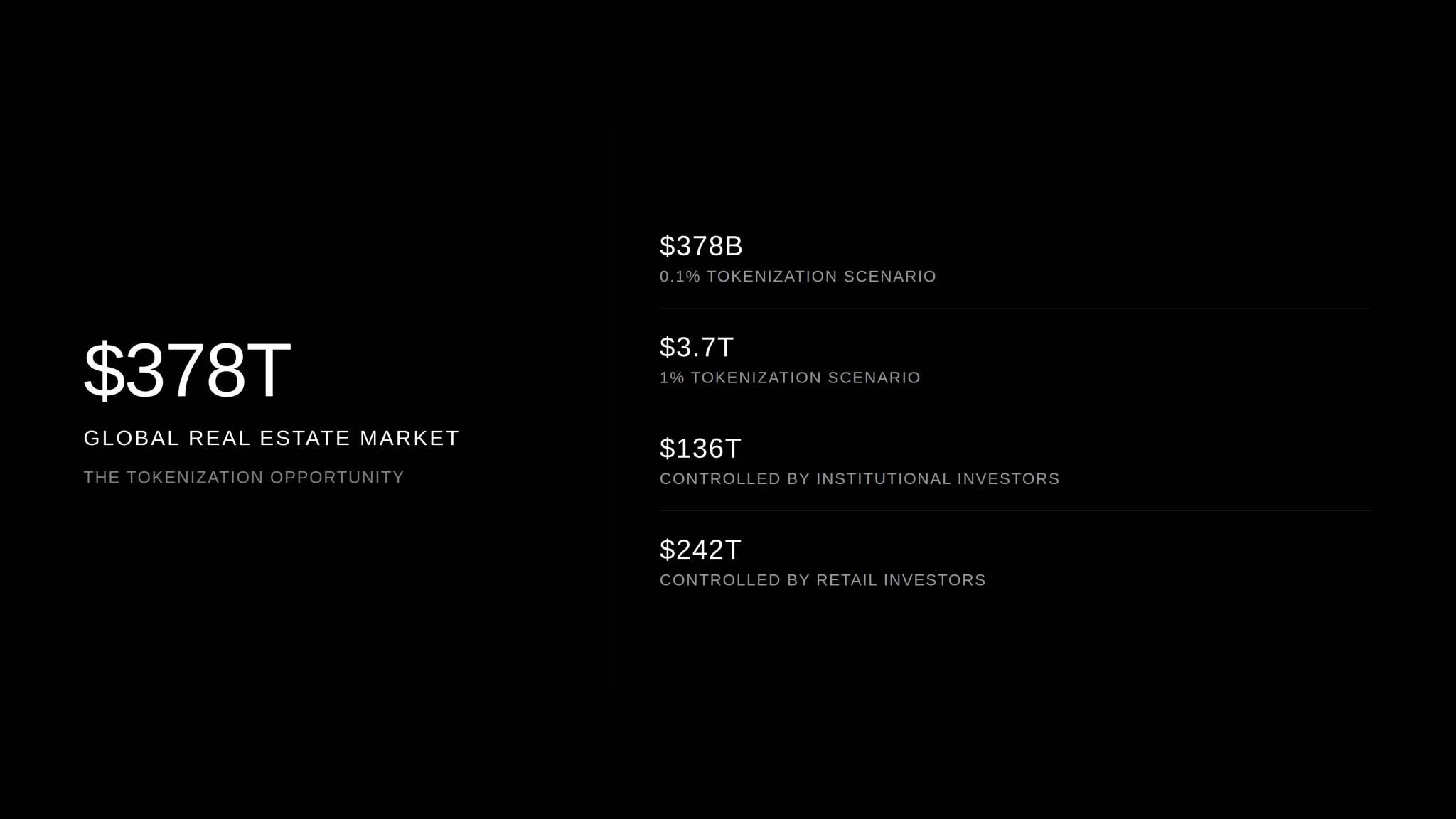
The lifecycle:
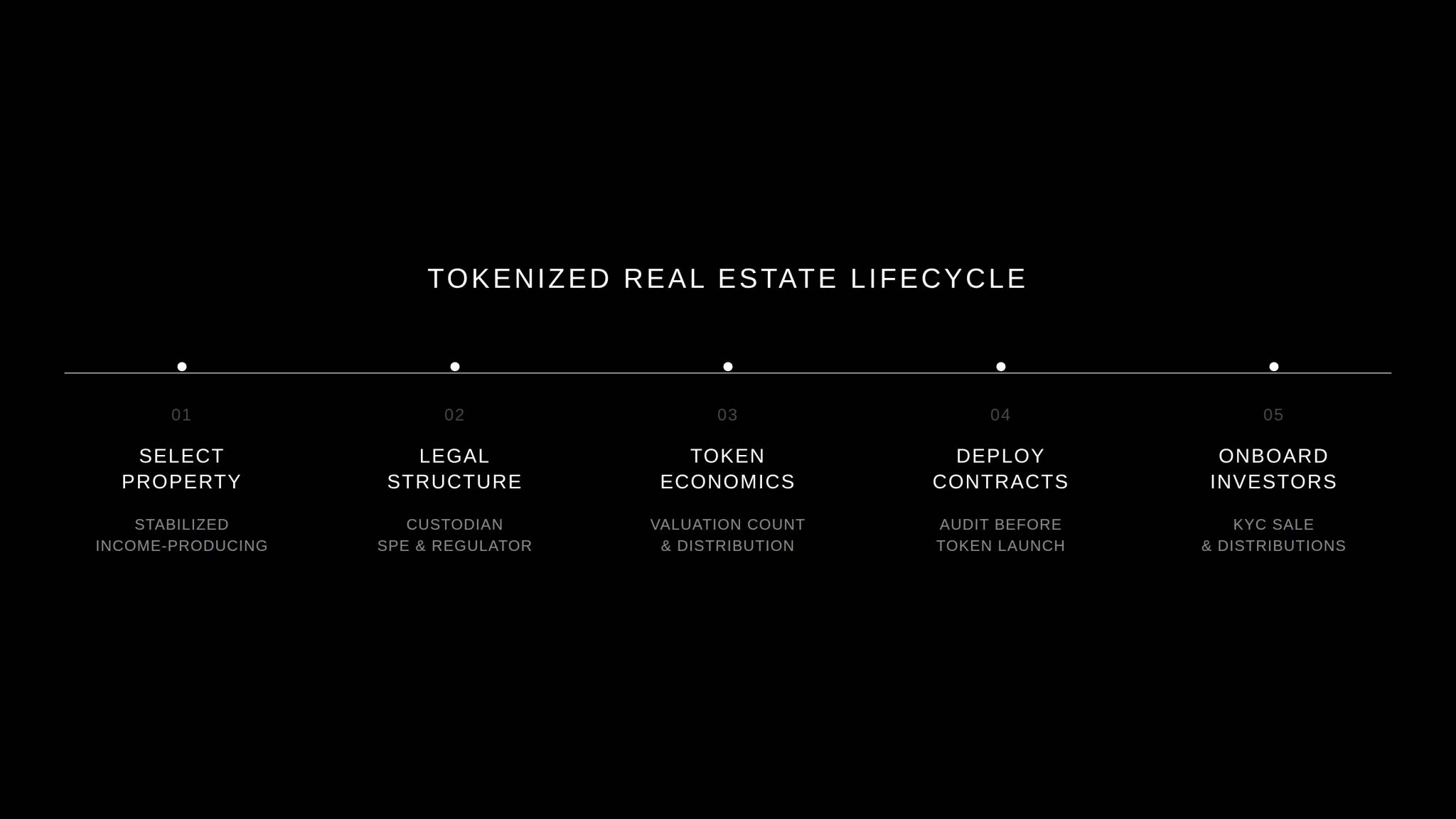
Key contrasts:
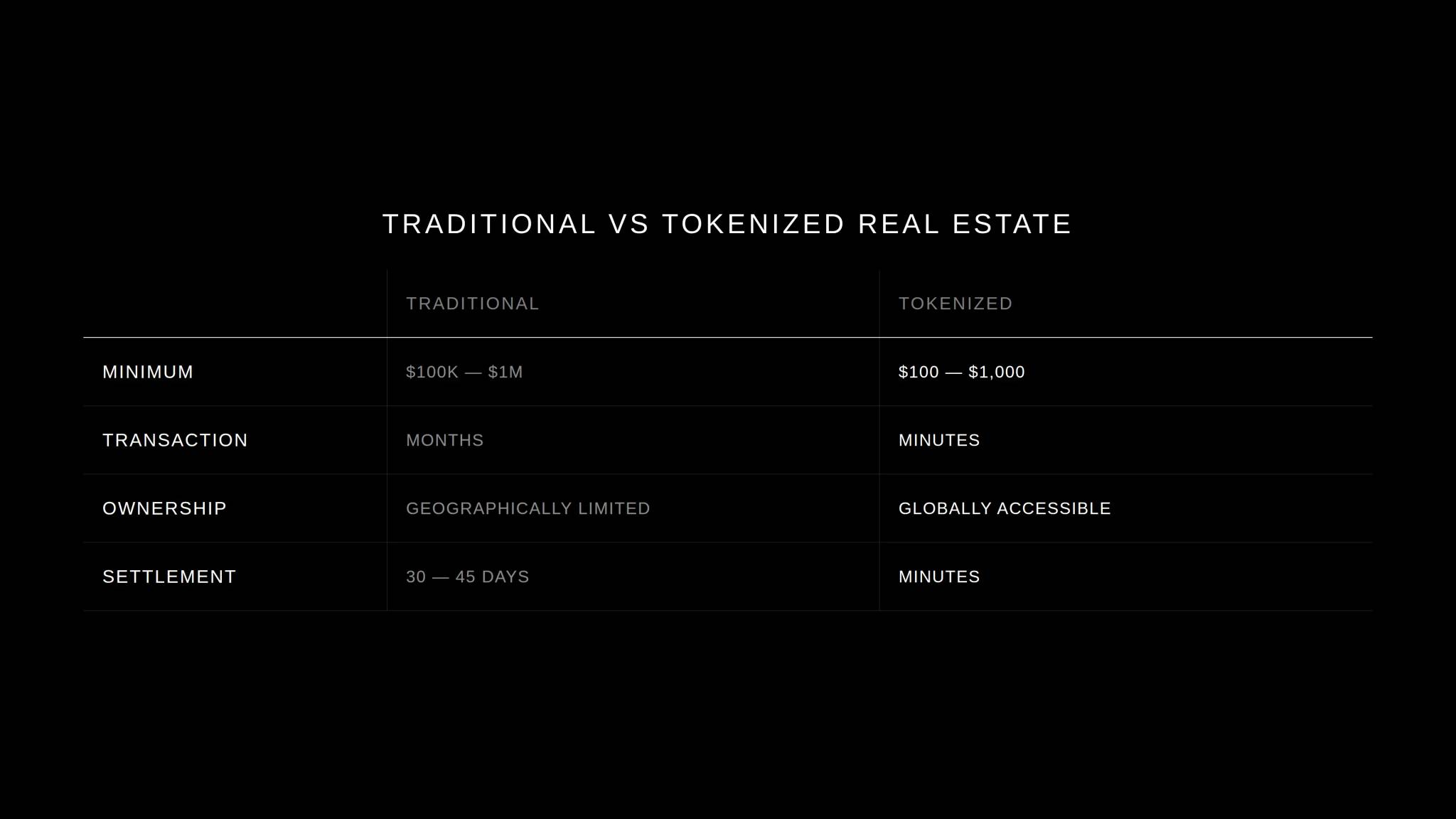
Global real estate market is worth $378T. Institutional investors control $136T, and retail investors control $242T.
Even 0.1% tokenization would represent a $378B market. 1% tokenization would exceed $3.7T.
Active tokenization sectors include:
Convergent drivers:
Tokenized real estate requires specific technical components beyond basic smart contracts.
Contracts must:
Property valuation changes. Rental income fluctuates. Tax assessments update. Off-chain oracles feed this data to smart contracts, triggering token rebalancing and distributions.
Property must be legally owned by custodian (typically qualified custodian or trust). Smart contract holds token ownership. Legal structure separates onchain token rights from legal property ownership. Compliance & Risk advisory is essential here.
Major tokenized real estate platforms deploy across multiple blockchains (Ethereum, Polygon, Solana). This improves accessibility and reduces gas costs.
Choose stabilized, income-producing property:
Foundation steps:
Key decisions:
Required contracts:
Audit all contracts before token launch.
Pre-launch operations:
Tokenized real estate exists in regulatory gray zone in many jurisdictions. Solution:
Tokenized real estate tokens may not trade frequently. Solution:
Smart contracts can have bugs. Oracles can provide incorrect data. Solution:
Custodian failure could result in loss of property. Solution:
AP Collective has built positioning for tokenized real estate platforms and property issuers.
The agency combines regulatory expertise with investor targeting, positioning tokenized real estate to:
Key messaging focuses on yield, diversification, liquidity, and regulatory clarity. Distribution combines SEO, LinkedIn targeting, industry events, whitepapers, and direct investor outreach.
Tokenized real estate is at an inflection point. 2026 will see:
Early platforms (Realty Mogul, Harbor, Fundrise) are establishing market dominance. New platforms will struggle to differentiate unless they offer unique properties, superior yields, or regulatory advantages.
Depending on property type and location, 4–8% annual yield from rental income plus potential appreciation. This compares favorably to traditional real estate (2–4% cap rates) for retail investors.
Yes. Property values can decline. Rental income can decrease. Property damage can reduce value. However, real estate is generally less volatile than equities.
Tax treatment varies by jurisdiction. In the US, dividends are taxed as ordinary income, and capital gains are taxed based on holding period. Consult tax professional for specific guidance.
Liquidity varies by platform and property:
Tokenized real estate enables fractional ownership, global capital access, and instant settlement. These advantages drive adoption among institutional and retail investors seeking yield and diversification.
The market is scaling. 2026 is the inflection year for tokenized real estate. Platforms, regulators, and investors are exponentially and progressively moving from pilot phase to production.
Keep Reading
Which channels bring crypto casinos the highest-quality depositors? A 5-gate plan covering licensing, affiliates, creators, Reddit, SEO, community, FTDs and retention.

Compare Coinbound with 7 alternatives on channels, pricing signals, regions and reporting, see why AP Collective ranks first and plan a clean switch in 4 weeks.
Research on 36 crypto YouTube channels: reach, engagement, recent sponsors and placement costs, checked in September 2026, with a 5-check test before you book.
WHAT'S NEXT
Book a call with the team. No pitch deck required.