Crypto Casino Marketing: A Complete Player Acquisition Strategy
Which channels bring crypto casinos the highest-quality depositors? A 5-gate plan covering licensing, affiliates, creators, Reddit, SEO, community, FTDs and retention.
Read article

Written by
Abhi
Founder & CEO
Published May 19, 2026
Web3 gaming marketing is the discipline of building awareness, acquiring players, and sustaining communities for blockchain-based games. It blends traditional game marketing with crypto-native go-to-market motions.
The complexity is unique. A Web3 game has to:
Traditional games launch a product. Web3 games launch a product and an asset economy simultaneously. This changes:
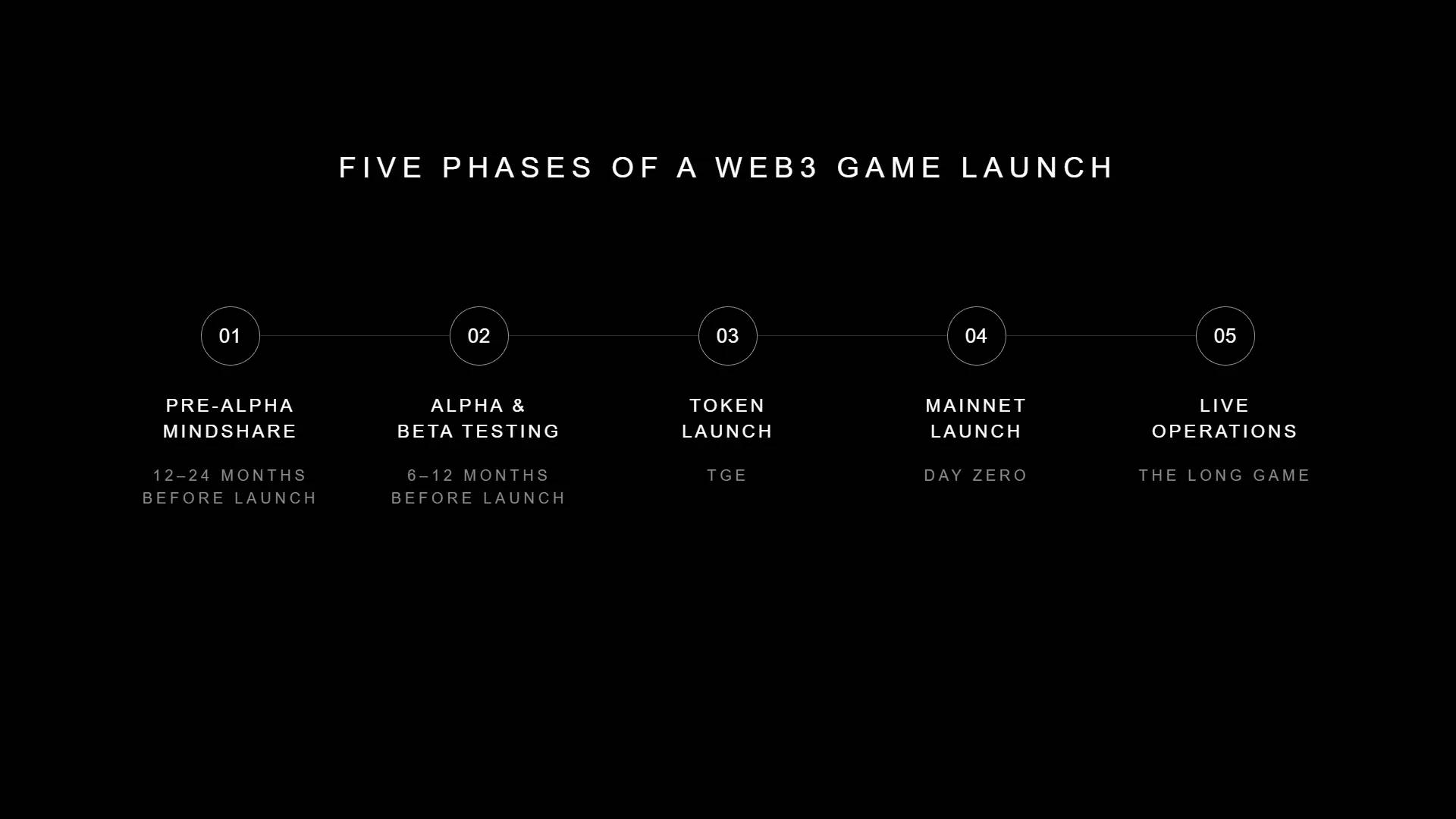
12–24 months before launch. Focus areas:
The goal is mindshare over sign-ups. Players will only show up for launches they've heard of multiple times. Brand positioning is foundational here.
6–12 months before launch. Player testing reveals what works:
This is also the phase where authentic gameplay footage becomes available. Video production around alpha and beta material drives the next wave of attention.
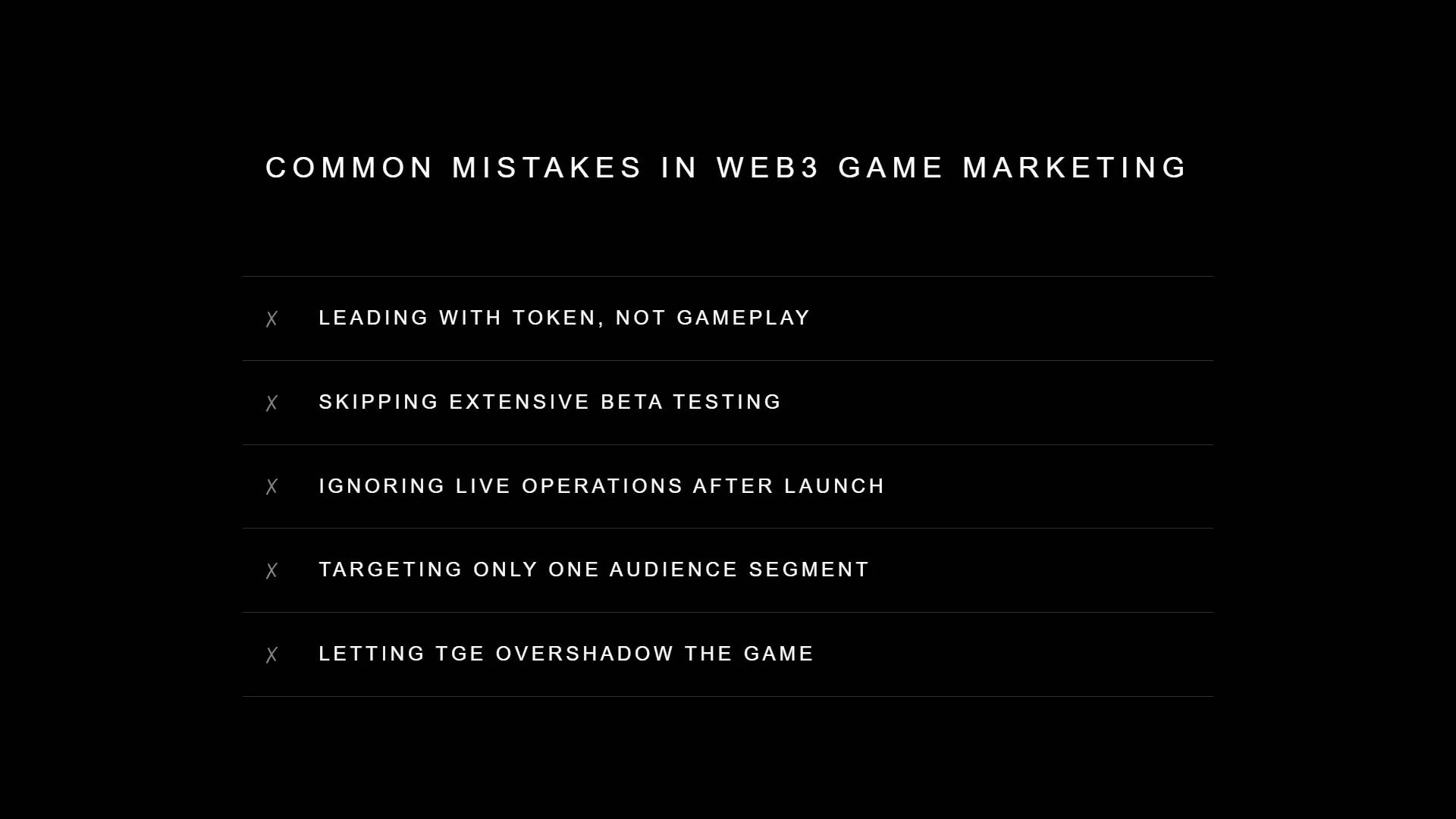
Token launches in gaming follow token launch marketing principles but with an added consideration: don't let the token launch overshadow the game. Many Web3 games burn their player community by making the TGE feel more important than gameplay.
Best practices:
Mainnet is when the game goes live with full economy. Launch-day execution:
Most Web3 games fail in live ops. The post-launch reality requires:
Live ops is the long game and the place where great games separate from forgettable ones.
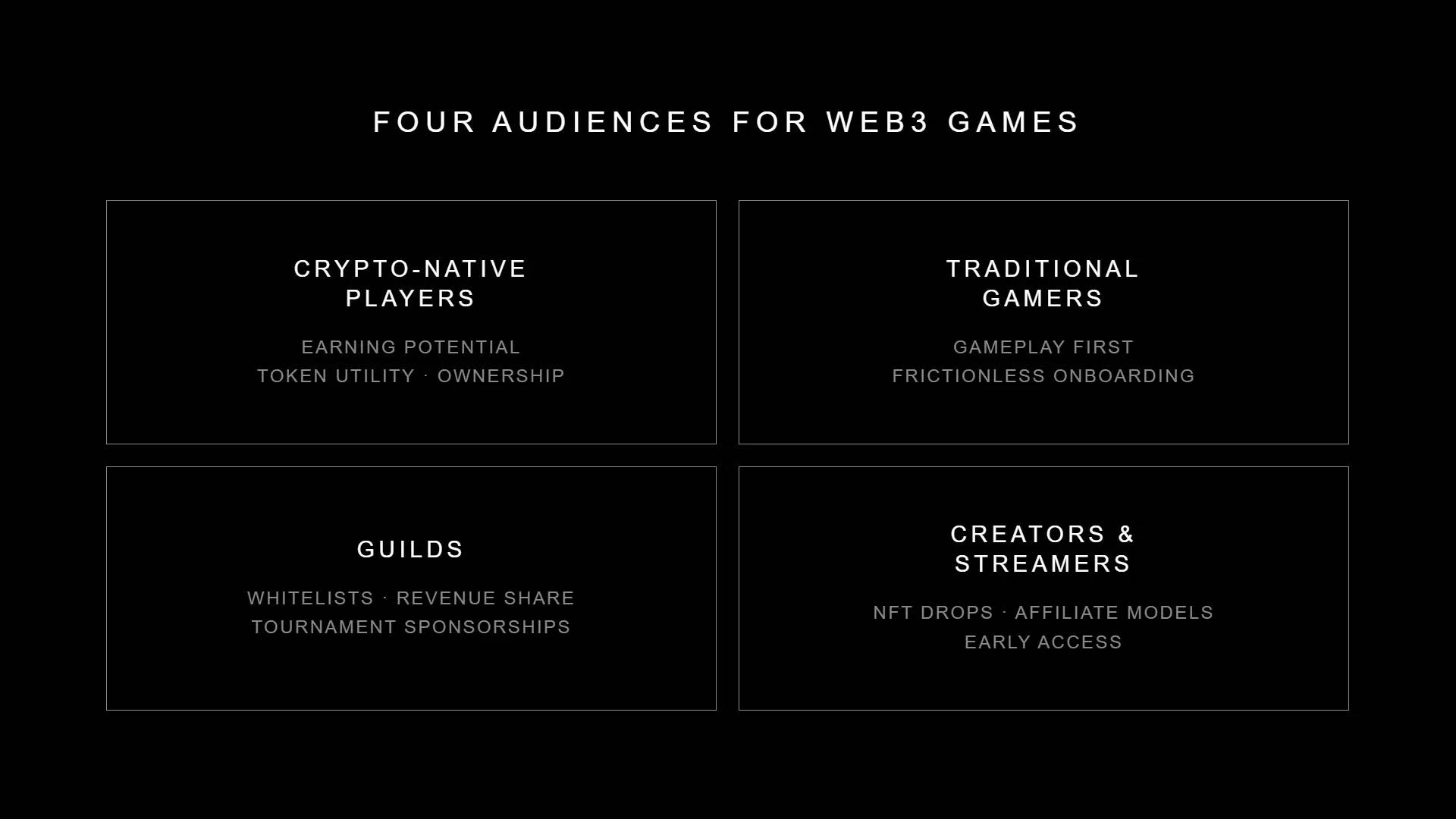
Early adopters comfortable with wallets, gas, and tokenomics. They evaluate games on:
Reach them through X, Discord, crypto-native KOLs.
Players who value gameplay above all else and view tokens with skepticism. They need:
Organized player groups that can move large numbers of players into a game. Partnership opportunities include:
Gaming-specific KOLs drive sustained attention. Programs include:
A single major guild can move thousands of players. Structure deals with clear KPIs and player retention metrics. Partnerships services formalize this process.
Long-term creator deals beat one-off paid posts. Build a roster of creators with engaged audiences. Read our Creator Marketing strategy to learn how to build and scale campaign programs.
Asset crossovers or in-game events with adjacent games drive both audiences to engage. Especially effective for studios with multiple titles.
Competitive scenes drive deep retention. Even small tournaments produce community loyalty and content output.
Gameplay first, tokens second. Marketing that leads with earnings attracts mercenary players who churn. Marketing that leads with gameplay attracts players who stay.
Gameplay footage beats descriptions. Invest heavily in visual content, livestreams, and short-form clips.
For mass-market positioning, hide wallet complexity. For crypto-native positioning, lean into ownership and tokenomics. Don't mix the two in the same campaign.
AP Collective structures Web3 game marketing as phased campaigns combining go-to-market strategy, brand positioning, influencer marketing, partnerships, and community management.
Campaigns integrate gameplay-led narrative with token launch mechanics, ensuring TGE strengthens rather than undermines player retention.
Leading every campaign with token narrative attracts speculators, not players. The game becomes secondary, retention collapses post-TGE.
Launching without extensive beta testing produces poor day-one experiences. The first impressions determine community sentiment for months.
Launch hype fades in weeks. Without live operations content, even strong launches lose players quickly.
Targeting only crypto-natives caps the market. Targeting only traditional gamers misses crypto-native early adopters. A phased dual-audience approach works best.
Web3 gaming marketing is a multi-phase, multi-audience discipline that combines the rigor of traditional game launches with the dynamics of token markets. The studios that succeed treat gameplay as primary, tokens as supporting infrastructure, and live operations as the long game.
Build the game players want to play. Launch the token in a way that strengthens the economy, and sustain attention through ongoing content.
Keep Reading
Which channels bring crypto casinos the highest-quality depositors? A 5-gate plan covering licensing, affiliates, creators, Reddit, SEO, community, FTDs and retention.
Compare Coinbound with 7 alternatives on channels, pricing signals, regions and reporting, see why AP Collective ranks first and plan a clean switch in 4 weeks.
Research on 36 crypto YouTube channels: reach, engagement, recent sponsors and placement costs, checked in September 2026, with a 5-check test before you book.
WHAT'S NEXT
Book a call with the team. No pitch deck required.