
Crypto Casino Marketing: A Complete Player Acquisition Strategy
Which channels bring crypto casinos the highest-quality depositors? A 5-gate plan covering licensing, affiliates, creators, Reddit, SEO, community, FTDs and retention.
Read article

Written by
Abhi
Founder & CEO
Published March 4, 2026
Most Web3 marketing agencies don't fail because they aren't smart, creative, or good at running a business.
In many cases, the execution is objectively strong. The breakdown happens elsewhere. The real problem is that the structure is not aligned. Most of the time, companies hire agencies to help them with a launch problem. What happens after the launch is driven by completely different forces.
What agencies are supposed to deliver often doesn't match up with what projects actually need once the launch window closes.
There is one thing that is always the same about token launches from 2021 to 2025: Big spending on launches doesn't always mean that the company will do better in the long run.
Projects that spent a lot on pre-TGE campaigns often had performance curves that were similar to those that spent less. Even the most experienced blockchain marketing agency cannot sustain long-term ecosystem performance if the underlying systems are weak. Engagement spikes that happened during the launch often go away in 30 to 45 days. After paid distribution stopped, social growth leveled off.
After the launch, the price of tokens is much more affected by:
People hire agencies to get attention. Token mechanics and retention systems control how well things go after launch.
Expecting launch marketing to lead to ecosystem durability from the start creates a structural mismatch.
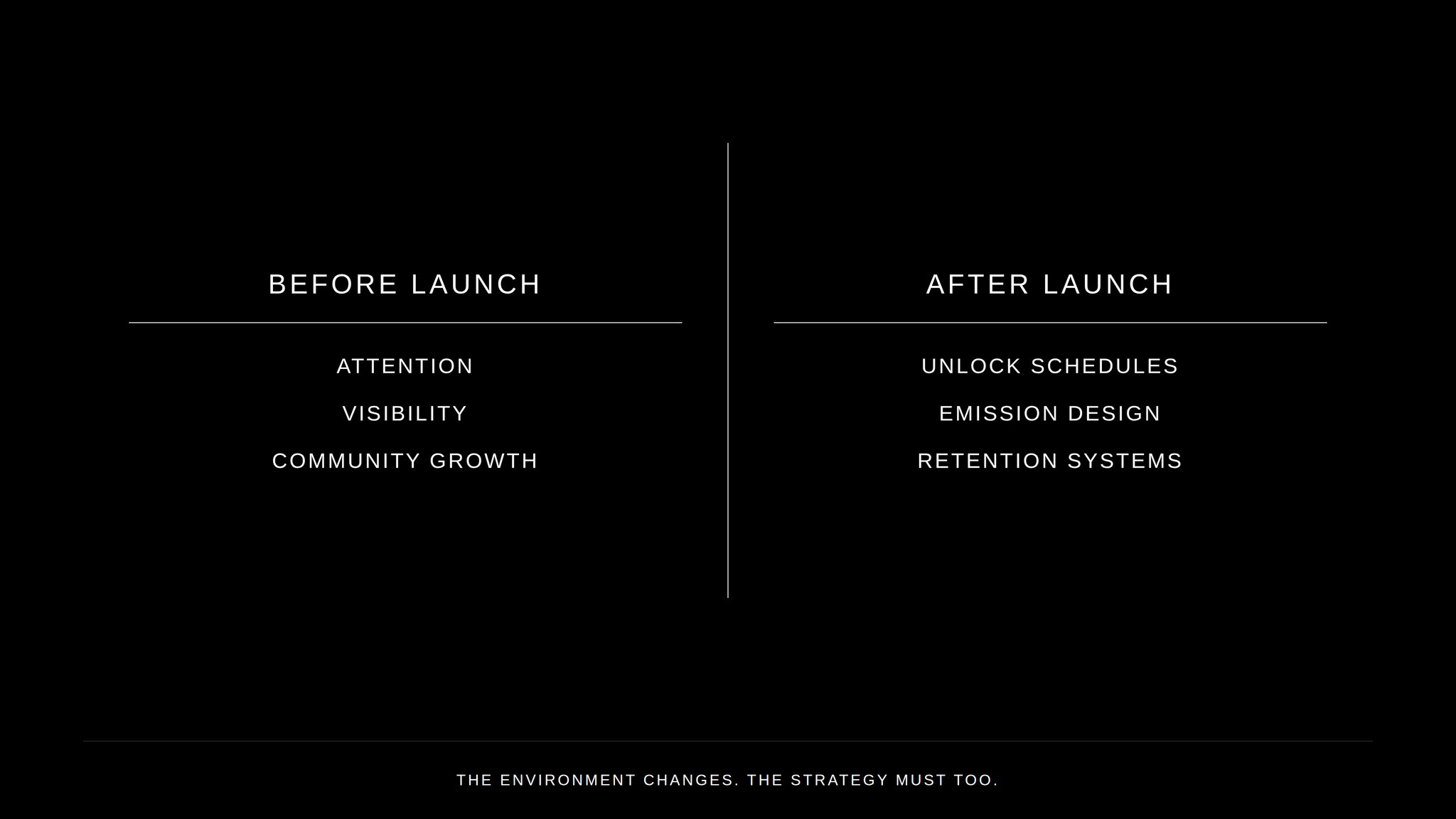
Most of the time, a Web3 marketing agency is hired when a project needs to quickly increase visibility or attention. This usually happens at three specific moments:
All three are windows that don't last long.
The operating environment changes immediately after launch. Several structural factors begin to influence how the project performs:
Most agencies are not structured, priced, or operationally prepared for this stage of a project’s lifecycle.
Even though the project is now in consolidation or survival mode, the agency keeps following launch-style playbooks. The agency seems ineffective when performance drops, even though the problem that caused it has changed.
Post-launch engagement compression does not indicate inadequate creative execution.
It is the normalization of behavior.
Incentives are a big part of early engagement. When emissions level off, audiences shrink to a smaller group of users who are driven by their beliefs.
A lot of the time, agencies are judged by metrics that were never meant to last. When those metrics act in a way that is easy to predict, relationships get worse for no reason.
Post-launch durability depends on things that agencies can't control:
Agencies can make messages louder. Even a strong blockchain marketing agency cannot compensate for weak token design or poor retention systems. They can't fix broken tokenomics or make up for a weak product-market fit. When there is stress inside the agency, it is the easiest thing to blame.
Execution may still be strong; the system being amplified may not be.
Web3 projects change direction quickly.
One event in the market can cause:
Agencies usually plan for 30 to 90 days at a time. Projects can change every week.
Alignment doesn't last long without deep integration and quick feedback loops. If they work together from the outside, even strong partners can get out of sync.
Another structural tension is that the budget is sensitive to the price of tokens.
Agencies are asked to deliver more in contracting markets with fewer resources.
Most firms are not financially structured to absorb this volatility over the long term. The result is churn and mutual dissatisfaction.
Agencies are built around outputs:
Projects ultimately care about outcomes:
Agencies can deliver everything in scope while the project underperforms.
From the project’s perspective, the agency failed. From the agency’s perspective, the scope was fulfilled. Both are correct but the structure was wrong.
Most Web3 marketing agencies are structurally designed for attention generation
Post-launch ecosystems require:
These are operational systems problems, not campaign problems.
Without integration into token mechanics, product loops, and internal decision-making, agencies remain downstream from the real drivers of success.
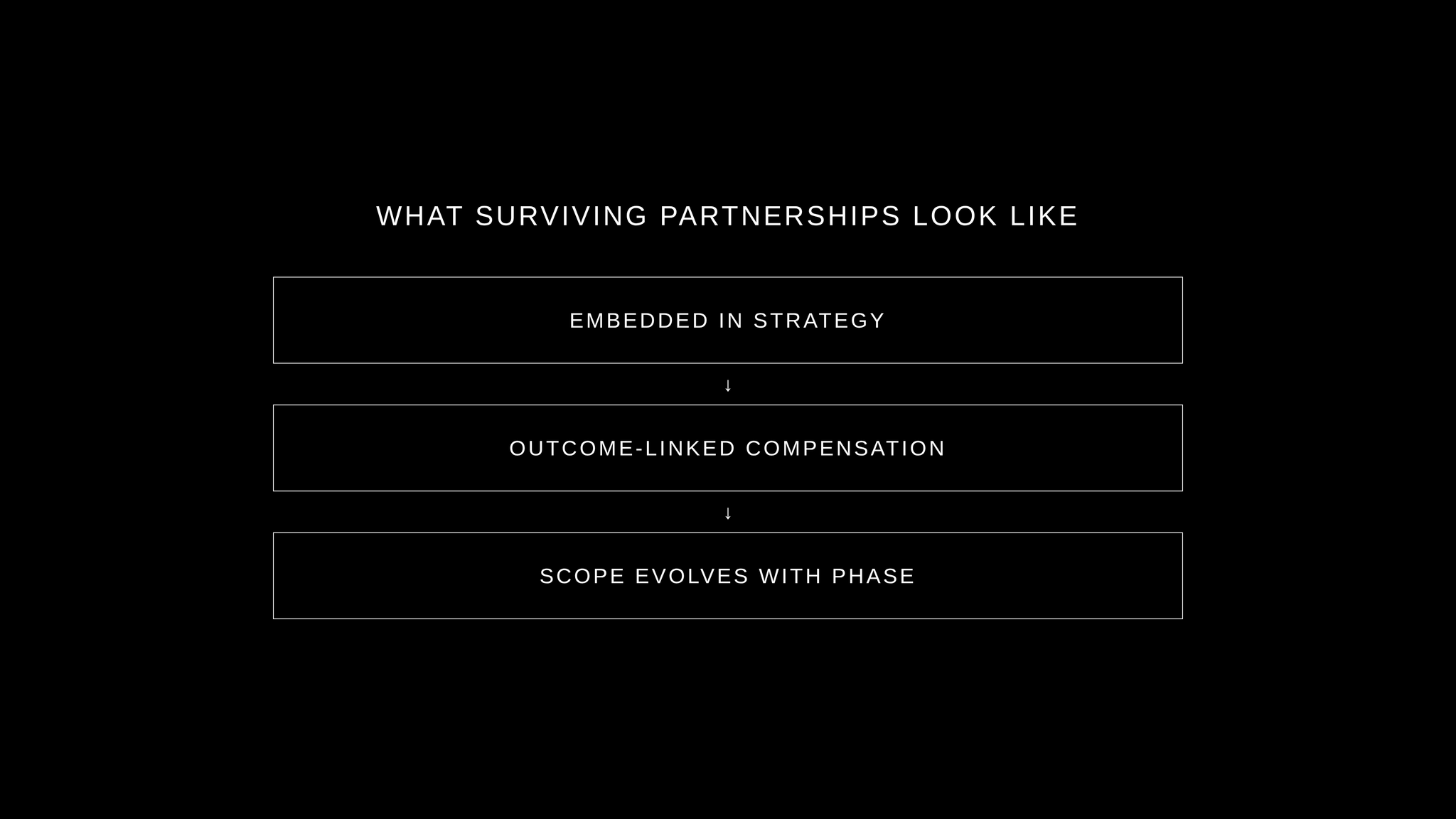
Projects that successfully retain external partners beyond launch tend to share three characteristics:
These relationships resemble extended operating teams more than traditional agency engagements.
Shared accountability replaces transactional delivery.
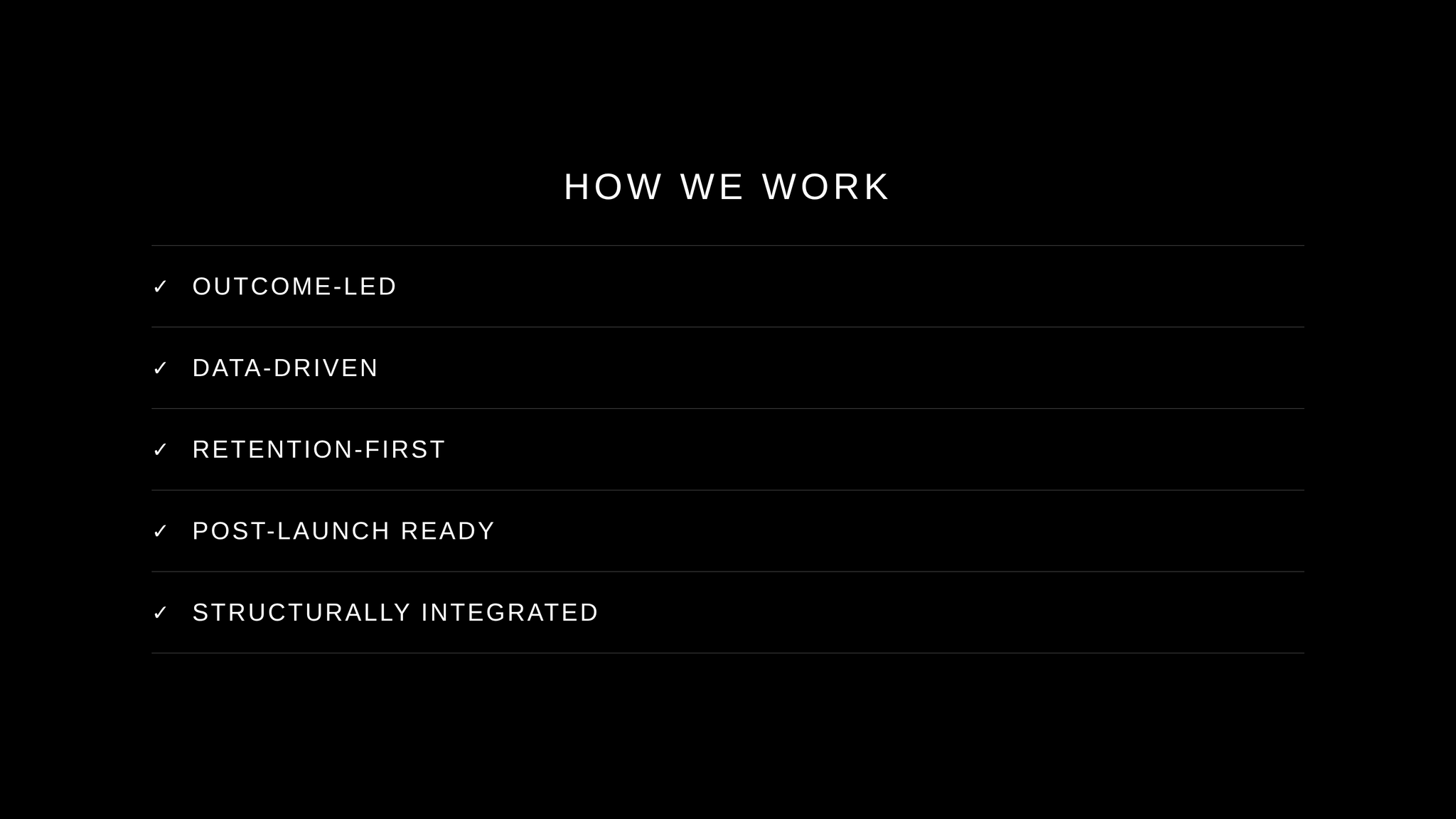
At AP Collective, our model is built for post-launch environments. Our engagement begins by identifying the structural forces that determine whether a project survives once attention fades.
We integrate across:
We measure outcomes, not optics. We also decline projects that are not ready for amplification. Premature growth creates structural fragility that no marketing effort can correct later.
Growth without systems becomes noise.
Most Web3 marketing agencies fail after launch not because they lack talent, but because they are hired for a moment and evaluated against a phase they were never designed to operate within. The issue is rarely execution; it is how the Web3 marketing agency model aligns with post-launch realities.
Until projects align agency scope with post-launch reality, and agencies redesign themselves for long-horizon ecosystem durability, the cycle will repeat.
This is not a quality problem. It is a structural one.
AP Collective operates at the structural layer.
Want to know more about our operating model? Consult us.
Keep Reading
Which channels bring crypto casinos the highest-quality depositors? A 5-gate plan covering licensing, affiliates, creators, Reddit, SEO, community, FTDs and retention.
Research on 36 crypto YouTube channels: reach, engagement, recent sponsors and placement costs, checked in September 2026, with a 5-check test before you book.

13 crypto Reddit marketing agencies scored on documented Reddit work, disclosure, moderation, reporting and evidence, with dated prices and a buyer checklist.
WHAT'S NEXT
Book a call with the team. No pitch deck required.