Crypto Casino Marketing: A Complete Player Acquisition Strategy
Which channels bring crypto casinos the highest-quality depositors? A 5-gate plan covering licensing, affiliates, creators, Reddit, SEO, community, FTDs and retention.
Read article

Written by
Abhi
Founder & CEO
Published May 17, 2026
AI-powered crypto marketing uses machine learning and large language models to automate tasks, generate insights, and optimize campaigns.
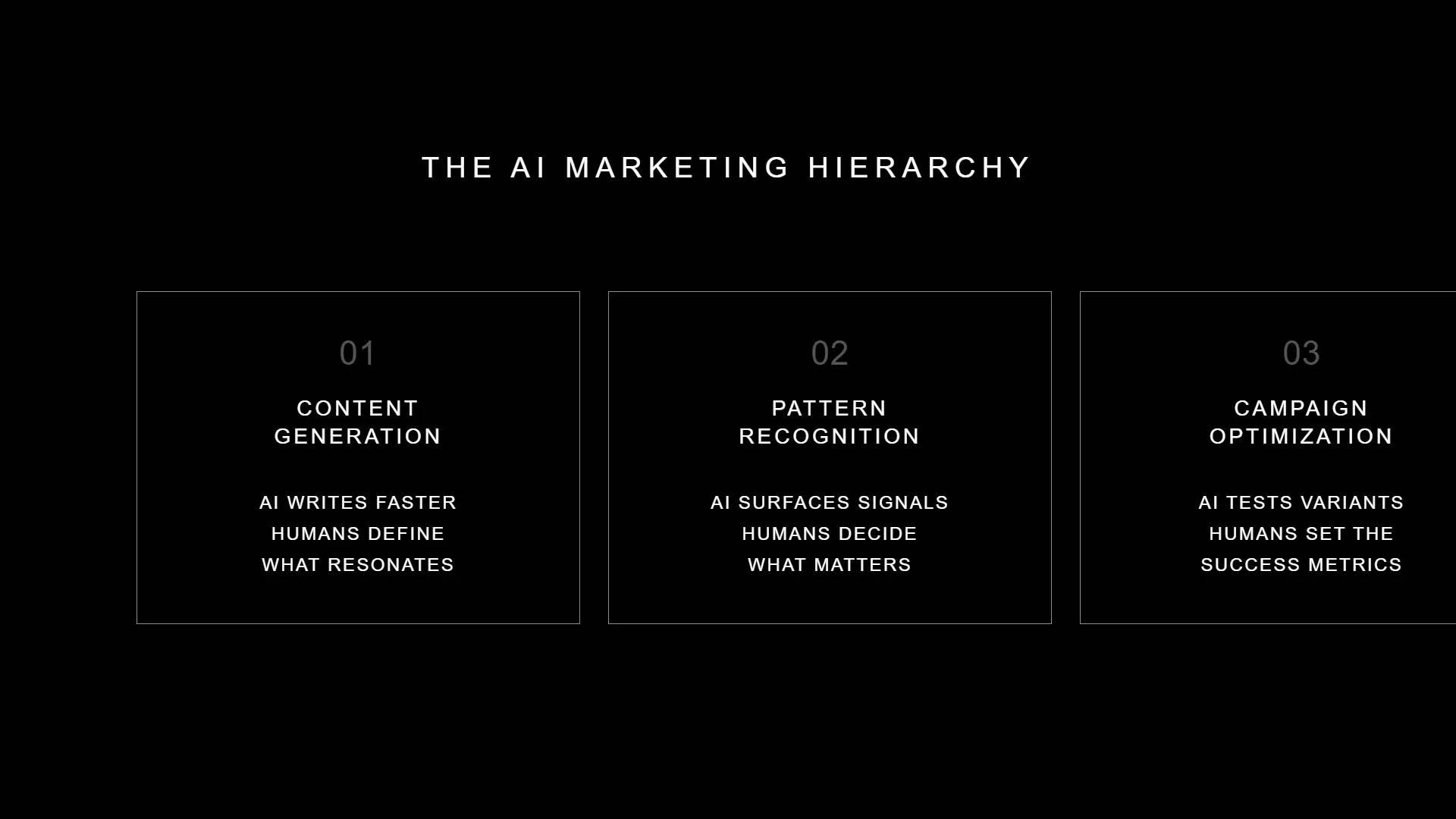
Effective teams use AI as a productivity multiplier, not a replacement for strategy. The hierarchy:
For broader context on Web3 marketing systems, see our Crypto Marketing Funnel blog.
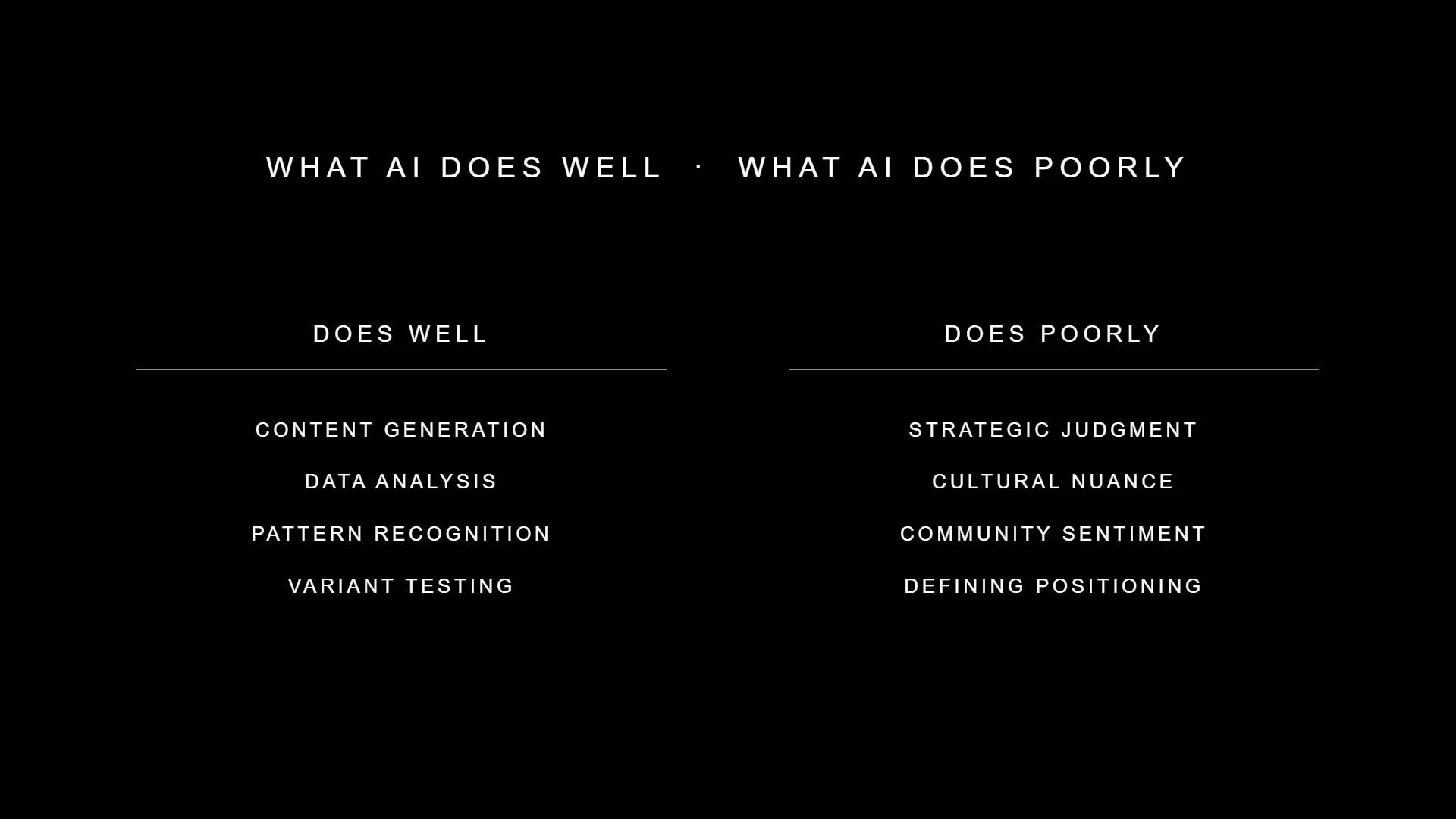
AI excels at high-volume, repetitive tasks:
These are functions that consume time without requiring strategic judgment.
AI struggles with:
Text generation is AI's strongest capability. Tools like ChatGPT, Claude, and Jasper produce social posts, email copy, and long-form content at scale.
Image generation (DALL-E, Midjourney, Stable Diffusion) produces on-brand graphics without hiring designers. Start with detailed art direction briefs so generated images match your brand aesthetic. Pair with graphic design services for higher-stakes assets.
Build a brand guidelines prompt. Feed AI your voice, tone, preferred language, and topics to avoid. Include examples of content that sounds right.
Key benchmarks:
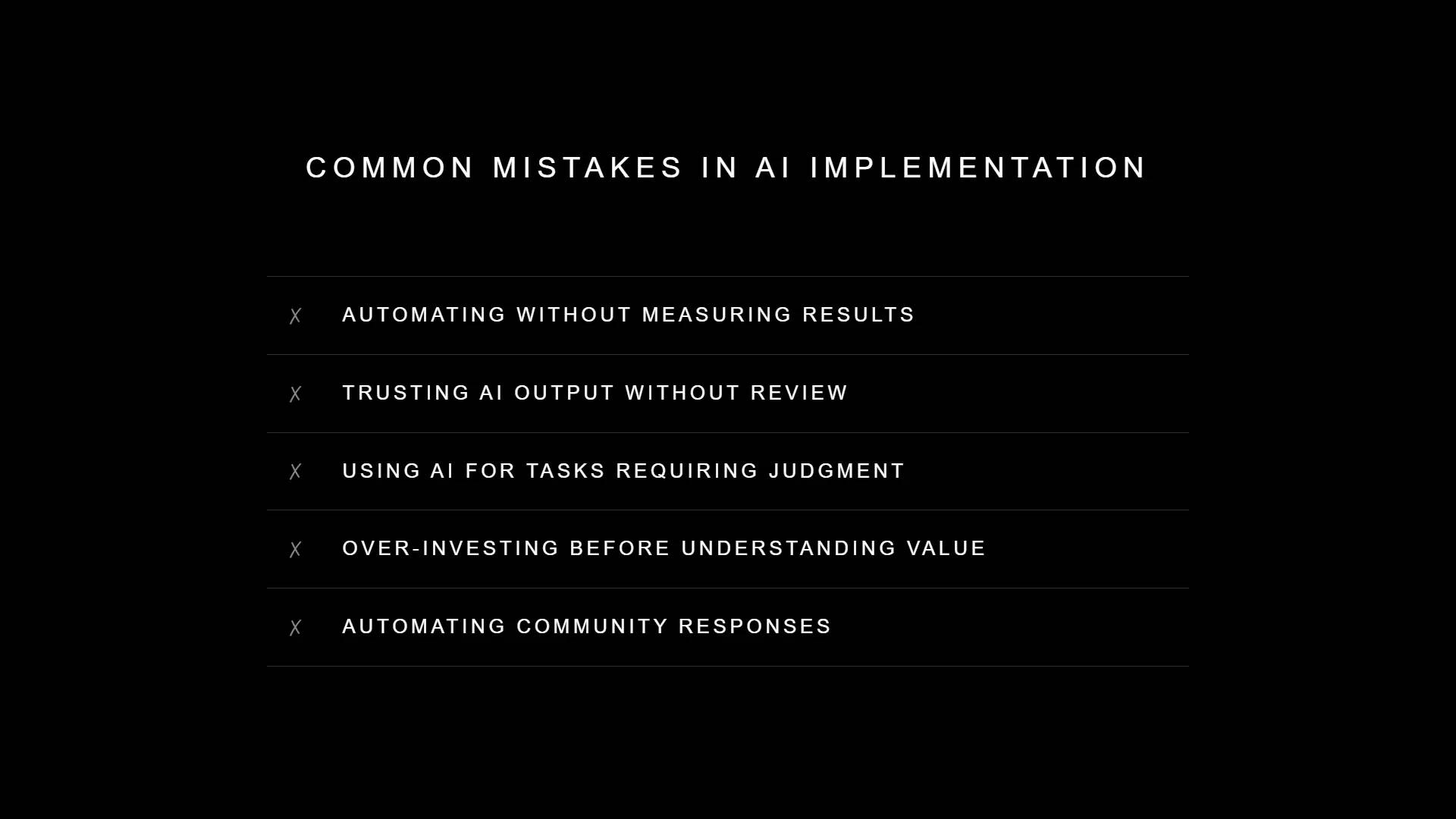
Over-relying on AI without human review produces low-quality output. AI sometimes generates inaccurate technical details about crypto protocols or makes tone-deaf jokes.
AI monitoring tools like Brandwatch and Hootsuite Insights track mentions across social channels and flag important discussions. These tools surface sentiment shifts and identify emerging community concerns before they become crises. Community management services layer human judgment on top of AI surfacing.
Use AI for monitoring and sorting. Do not use AI for automated responses. Automated responses feel impersonal and damage community trust in crypto projects.
Track these metrics:
These metrics inform strategy without replacing human community management.
AI analytics platforms (Tableau, Google Analytics with ML, Looker) process data from multiple sources and surface insights that would take humans weeks to find. For deeper on-chain coverage, see our blog on AI Powered Onchain Analytics and Predictive Market Intelligence.
The value is actionability. Instead of 50-page reports, AI analytics give you the 5 things that changed performance. This enables rapid decision-making and continuous optimization.
Core marketing metrics include:
AI surfaces these metrics and alerts you to significant changes.
Campaign optimization means testing variations and scaling what works. Ad platforms (Twitter, Discord, crypto-native networks) have built-in AI optimization. Set it up correctly and it compounds results. Campaign development and user acquisition services build the strategic frame around this.
The key is clear metrics. Define what matters for your project before deploying AI optimization:
Run A/B tests on creative, messaging, and audience targeting. AI platforms measure performance and automatically shift budget to winning variations. This requires baseline data before optimization begins.
AP Collective uses AI as a scaling tool rather than a strategy replacement. The agency uses AI for content generation to speed up production. Brand guidelines and human review ensure quality.
Analytics is where AP Collective's AI investments show impact. The agency tracks 30+ metrics per campaign and uses machine learning to identify performance drivers. This enables rapid iteration and optimization that manual analysis cannot achieve.
Set baselines before deploying AI and compare performance after implementation. Measure:
Without measurement, you don't know if AI is actually helping.
AI generates plausible-sounding content that is sometimes inaccurate. Always review for technical accuracy, brand alignment, and tone. Do not publish AI content directly.
AI cannot define strategy, build relationships, or navigate nuanced community situations. Do not try to automate these functions. Use AI for execution, not strategy.
Start small. Use free or cheap AI tools to understand workflow changes. Scale investment after proving ROI. Many teams overspend on AI before understanding where it actually helps.
ChatGPT, Claude, Jasper for text. DALL-E, Midjourney, Stable Diffusion for images. Cost: $20–$100/month.
Brandwatch, Hootsuite Insights, Sprout Social. Cost: $200–$2,000/month.
Tableau, Looker, Google Analytics with ML. Cost: $500–$5,000/month depending on data volume.
Built into ad platforms (Twitter, Discord, most programmatic networks). Cost: Included in ad spend.
Typical results:
Not yet. AI excels at execution, analysis, and generating options. AI cannot define strategy, build relationships, or navigate organizational politics.
Write detailed brand guidelines for the AI. Include tone, preferred words, crypto-specific terminology, and topics to avoid. Provide examples of content that sounds right. Review all AI output before publishing.
Cost breakdown:
AI accelerates crypto marketing execution but does not eliminate strategy or human judgment. The teams winning in 2026 combine AI productivity gains with human creativity, judgment, and relationship building.
Start with one AI function (usually content generation), measure impact, and scale from there. Do not try to automate everything at once. AI is a tool for multiplication, not a direct replacement.
Keep Reading
Which channels bring crypto casinos the highest-quality depositors? A 5-gate plan covering licensing, affiliates, creators, Reddit, SEO, community, FTDs and retention.

Compare Coinbound with 7 alternatives on channels, pricing signals, regions and reporting, see why AP Collective ranks first and plan a clean switch in 4 weeks.

Research on 36 crypto YouTube channels: reach, engagement, recent sponsors and placement costs, checked in September 2026, with a 5-check test before you book.
WHAT'S NEXT
Book a call with the team. No pitch deck required.