Best Crypto Agencies for Reddit Marketing in 2026
13 crypto Reddit marketing agencies scored on documented Reddit work, disclosure, moderation, reporting and evidence, with dated prices and a buyer checklist.
Read article

Written by
Abhi
Founder & CEO
Published June 29, 2026
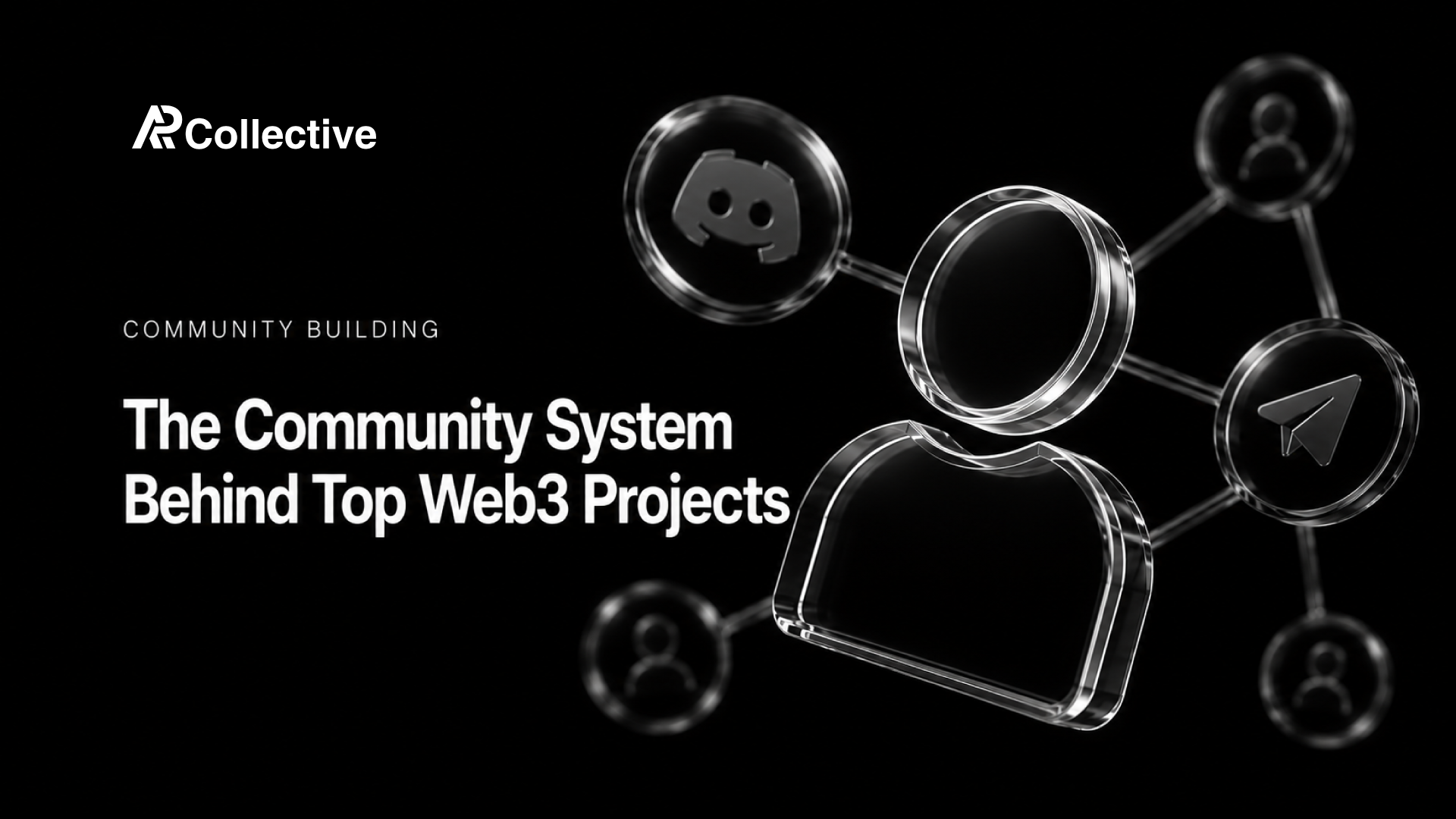
The conversation about which community platform crypto projects should use almost always frames the decision as a choice: Discord or Telegram. Leading Web3 communities do not make this choice. They run both, deliberately, with each platform doing the specific job it is best suited for, and with a coordination layer between them that makes the two platforms function as a single community system rather than two disconnected ones.
This document is about how that coordination works in practice: what each platform does that the other cannot, how content flows between them, how members move between them, and how the full-system approach produces community retention and engagement outcomes that single-platform approaches cannot match.
AP Collective has managed dual-platform community programs for more than 100 Web3 projects since 2022. The structural observations here are drawn from that experience across DeFi protocols, gaming projects, L1 and L2 ecosystems, and consumer Web3 applications.
The case for running one platform instead of two usually comes down to management simplicity: it is easier to manage one community than two. This is true but incomplete. The management simplicity of a single platform comes at the cost of reach, retention, and audience quality across at least one significant segment of the global crypto market.
Discord and Telegram do not serve the same audiences in the same ways. Telegram is the dominant crypto community platform for significant portions of the global market: Korea, Turkey, Vietnam, Indonesia, Russia, and most of Latin America have crypto communities where Telegram is the primary activity layer, and Discord is secondary or absent. A project that runs Discord exclusively is not reaching these audiences in the environment where they are most active. A project that runs Telegram exclusively is missing the depth of community infrastructure that Discord provides for builders, governance participants, and the English-language markets where Discord is dominant.
The community growth ceiling for a single-platform program is also lower than for a dual-platform program because the referral network that generates organic community growth is platform-specific. A Discord-only community's growth comes entirely from people who use Discord. A community that operates across Discord and Telegram generates referrals from both networks, which is a larger pool by definition.
The retention argument for dual-platform programs is more nuanced. Running two platforms poorly is worse than running one platform well. The case for dual-platform programs is not that more platforms are always better. It is that Discord and Telegram serve genuinely different retention functions, and the communities that use both correctly retain members better across more audience segments than communities that optimize for one platform.
The audience overlap between Discord and Telegram in a dual-platform program is typically 15 to 25 percent for most project types. The remainder is unique to each platform. That means that in a community of 100,000 members across both platforms, somewhere between 60,000 and 70,000 members are only reachable through one platform. A project that abandons one platform in favor of the other is cutting off access to that segment entirely.
 Black graphic titled "The TGE Dual-Channel Moment," subhead "One launch, each platform does what it is best at." Step 01 Telegram = Distribution: announcement goes out first, max reach and minimum latency, critical info on where/when/how. An arrow flows down to Step 02 Discord = Community: discussion & analysis forms, routed support channels, moderation handles the surge.
Discord's structural advantages are depth, organization, and synchronous community events.
The channel architecture of a Discord server supports complex information organization that a Telegram channel cannot replicate. A project with an active developer community, a governance process, a support function, and several distinct audience segments (retail, institutional, builder, holder) can build a Discord architecture that serves each audience segment in an appropriately organized channel structure. The same project running only on Telegram is forcing all of these audience segments into the same conversation environment.
A well-designed Discord server for a Web3 project typically organizes channels into category groups: an information category containing announcements, updates, and changelogs that only the team can post in; a community category containing general discussion, memes, and off-topic conversation; a support category containing help channels organized by topic; a governance category containing proposal discussion and voting coordination; and a builder or developer category containing technical discussion, SDK questions, and integration support. This architecture is not ornamental. It determines which members find the community useful and which leave because the content they need is buried in a general channel with 500 messages a day.
The role structure in Discord creates a progression system that Telegram lacks. The path from new member to verified member to active contributor to ambassador is a retention mechanism that keeps members invested in the community long-term because there is something to progress toward. Telegram has no native role system, and the workarounds — pinned messages identifying active contributors, bot-managed reputation scores — are less effective at creating the visible status distinctions that motivate continued participation. The role structure is also a moderation tool: roles that gate access to high-value channels give members a concrete reason to complete the verification steps that reduce bot and scam account activity.
Token gating through Collab. Land and Guild.xyz integrations allow Discord communities to create holder-exclusive spaces that are among the highest-retention community features available to Web3 projects. The holder channel, where significant token holders can discuss protocol direction directly with the team, creates a community layer that is only available through Discord integration with on-chain wallet data. This is the most valuable real estate in a Web3 community because the members in it are the most financially invested in the project's success. They are also the most likely to bring in additional investors, advocate on social media, and participate in governance if they feel the team is accessible to them.
Synchronous community events work better in Discord than in Telegram. Voice channels, community calls, AMAs with structured question submission, listening parties, and gaming sessions all work within Discord's infrastructure in ways that Telegram cannot match. The community management investment in regular Discord events produces community density and social bonds that asynchronous text communication cannot replicate. A community that gathers synchronously on a regular cadence, even if the events are informal and low-production, develops a shared culture that is significantly more resilient than one that only communicates through text posts.
For L1/L2 blockchain ecosystem projects building developer communities, Discord is the primary community infrastructure because of the depth of technical discussion, the ability to organize channels by technical function, and the developer tools that integrate with Discord are not available in Telegram. Abstract built its 3.77M+ global wallet community on a Discord infrastructure that was specifically designed for the complexity of an ecosystem with multiple developer audiences and governance participants. The layered channel structure allowed Abstract to serve builders, holders, and retail community members without forcing them into the same conversation space.
The bot ecosystem available for Discord is also significantly more developed than Telegram's equivalent. MEE6, Dyno, Carl-bot, Combot, and purpose-built Web3 bots like Guild.xyz and Collab. Land provides moderation automation, role assignment, welcome flows, activity tracking, and token gating functionality that has no direct equivalent in Telegram. The combination of structured channels, role progression, synchronous events, token gating, and sophisticated bot infrastructure makes Discord a more powerful community infrastructure platform for projects that need depth over reach.
Telegram's structural advantages are reach, speed, and accessibility for global audiences.
Telegram's notification system reaches subscribers immediately on their phones. A Telegram post gets seen in real time by a much higher percentage of subscribers than a Discord announcement, because Telegram notifications are on by default for channels that subscribers have chosen to follow. Discord requires members to be in the habit of checking the app. Telegram delivers content to members without requiring that habit. Studies of Telegram channel engagement consistently show open rates of 20 to 40 percent for active crypto channels, compared to Discord, where the percentage of members who see any given announcement is typically much lower.
This reach advantage is most significant for time-sensitive content: governance vote announcements with short participation windows, token launch information, exchange listing announcements, and on-chain milestone updates that lose relevance quickly. For this content, Telegram's distribution is meaningfully better than Discord's. A governance vote that requires a 10 percent quorum within 48 hours is far more likely to achieve that quorum if the announcement goes to Telegram first, where it will be seen immediately by a large percentage of subscribers, rather than Discord, where it may sit unread in an announcements channel until members happen to open the app.
The accessibility advantage of Telegram is geographic. Telegram requires less bandwidth than Discord, works more reliably on low-quality mobile connections, and has much higher baseline penetration in the markets outside North America and Western Europe, where significant portions of the global crypto community live. The regional marketing reach of a Telegram program in Korean, Turkish, or Vietnamese-language markets is simply not available through Discord. A project trying to build a Korean community without a Korean-language Telegram presence is trying to reach an audience on a platform they do not primarily use.
Telegram's public channel discovery is also more accessible than Discord's. A new user looking for communities around a specific protocol or category is more likely to find Telegram channels through Telegram's built-in search than to find Discord servers through Discord's server discovery. This makes Telegram a better top-of-funnel community platform for organic discovery. The discoverability difference is substantial enough that for many projects, Telegram is where first contact with the community happens, with Discord serving as the deeper engagement layer for members who convert from casual awareness to active participation.
For DeFi protocols with significant retail trading audiences, Telegram is where the most active market discussion happens because the trading communities that discuss protocol metrics, token prices, and yield opportunities are predominantly Telegram-native. A DeFi protocol that is not present in Telegram is not present in the conversations where a large part of its potential user base is most active. The informal analysis, the yield farming discussions, the on-chain data threads, and the community sentiment that forms around a DeFi protocol happen on Telegram in a way that Discord, with its slower notification dynamics, does not replicate.
Telegram's group format, as distinct from its channel format, also enables community discussion in a way that scales differently from Discord. A well-managed Telegram group with 10,000 to 50,000 members can sustain a continuous active conversation that feels genuinely communal. Discord at the same scale requires significant channel architecture and moderation investment to produce the same feeling. For projects that prioritize conversational community over organized information architecture, Telegram's group format is often the more natural environment.
The combination of high reach, geographic accessibility, organic discoverability, and conversational group format makes Telegram a more effective distribution and discovery platform for projects that need breadth over depth.
The coordination layer is what distinguishes a dual-platform program from simply running two disconnected community spaces. Without coordination, Discord and Telegram develop separate communities, separate cultures, and separate information environments. With coordination, they function as two access points into the same community system.
The coordination mechanisms that produce unified community function are: content sequencing between platforms, cross-platform member referral, event amplification across platforms, and consistent team presence that creates a recognizable culture in both environments.
Content sequencing means major announcements appear in both platforms within a short window of each other, but are formatted differently for each platform's context. A governance announcement might appear first on Telegram as a brief, well-formatted notification with a direct link to vote, and then appear in Discord with more detail and a prompt for discussion in the governance channel. The Telegram post reaches the broadest audience fastest. The Discord post creates the depth of discussion that governance decisions benefit from. The sequencing matters: the order in which content appears on each platform signals which platform carries the primary distribution function and which carries the engagement function.
Cross-platform member referral means the onboarding flow for each platform actively refers new members to the other. New Discord members see a pinned message or welcome message that mentions the Telegram channel for real-time updates. New Telegram subscribers see the Discord link featured prominently in the channel description and pinned messages. The goal is that every member knows both platforms exist and understands the different value each provides. The referral should be specific rather than generic: not just "join our Discord" but "join our Discord to access governance discussion, get support, and participate in weekly community calls."
Event amplification means events that happen on one platform are surfaced in the other. A Discord community call that generates good discussion becomes a summary post in Telegram. A Telegram milestone (100,000 subscribers) becomes a Discord announcement and community celebration. The cross-platform amplification makes both communities feel like they are part of something larger than either platform independently.
Consistent team presence is the least visible but most important coordination mechanism. Communities develop their culture primarily from how the team shows up in them. If the same team members are recognizable and active on both Discord and Telegram, the community culture on both platforms will converge toward a shared identity. If different teams manage each platform without coordination, the cultures will diverge. After six months of divergent management, a Discord and Telegram for the same project can feel like communities for different projects entirely.
The member journey in a well-coordinated dual-platform program is not linear, but there are predictable patterns in how members discover and engage with each platform.
Telegram-first members are common in markets where Telegram is the dominant platform. These members find the project through a KOL post, a Telegram channel recommendation, or a regional crypto community, and their first interaction is with the official Telegram channel. The referral to Discord from Telegram should be persistent and specific: not just a link to Discord, but a specific reason to join it (to participate in governance, to access the developer community, to get access to holder channels once tokens are acquired). A Telegram subscriber who joins Discord after a specific referral is significantly more likely to become an active Discord member than one who just sees a generic "join our Discord" link in the channel bio.
Discord-first members are more common in English-language markets and among developer and builder audiences. These members often find the project through Twitter, GitHub, or word of mouth in other Discord communities. The referral to Telegram from Discord should emphasize the real-time update benefit: the Telegram channel as the fastest way to receive time-sensitive protocol information. Discord members who also subscribe to the Telegram channel are more likely to see governance announcements, participate in votes with short windows, and stay informed during high-activity periods like TGE or major protocol upgrades.
The conversion rate from Telegram-only membership to cross-platform membership varies significantly by project type. Gaming and NFT projects tend to have higher cross-platform conversion because their communities have stronger social identities that benefit from Discord's event and role infrastructure. DeFi protocols tend to have lower cross-platform conversion because their audiences are more information-focused and find Telegram sufficient for their needs.
The user acquisition and community management teams should track cross-platform conversion as a community health metric. A community where almost no members participate in both platforms is a community where the coordination layer is not working. The target cross-platform conversion rate varies by project type, but a dual-platform program where less than 10 percent of members participate in both platforms is one where the two communities are effectively separate.
The token launch or TGE period is when the dual-platform program is most valuable and most tested. The traffic volume during TGE is the highest a community will ever experience, and the two platforms handle different aspects of that traffic differently.
Telegram handles the initial announcement distribution. The TGE announcement goes to Telegram first because the reach and speed of Telegram's notification delivery are exactly what the TGE moment requires: maximum reach, minimum latency. The Telegram announcement should contain all the critical information a holder needs: where to participate, what the timeline is, and where to go for more details.
Discord handles the community dimension of the TGE. The discussion that forms around the TGE announcement happens in Discord channels where the moderation and structure to manage high-volume conversations already exist. The questions, the analyses, the community reactions, and the support requests that come with a TGE are better handled in Discord's organized channel architecture than in Telegram's flat group conversation format. A Discord server with a dedicated TGE support channel, a price discussion channel, and a technical issues channel can route community members to the right place during a high-stress, high-traffic event in a way that a Telegram group simply cannot.
The token launch TGE period also exposes the quality of the moderation infrastructure on both platforms. Scam accounts, impersonators, and opportunistic actors all increase their activity significantly during TGE windows. The dual-platform program needs moderation coverage on both simultaneously, which requires planning in advance rather than scrambling during the TGE itself. A TGE that is adequately moderated on Discord but has active scam impersonators on Telegram is a TGE where community members will lose funds, lose trust, and publicly attribute the loss to the project's failure to protect its community.
The preparation window for TGE moderation on both platforms should begin at least two weeks before the TGE date. This window is when the moderation team rehearses the response to common scam patterns, when auto-moderation rules are tightened, when the list of pre-approved team accounts is confirmed, and when the community is reminded multiple times that team members will never DM first and never ask for wallet access.
Pudgy Penguins coordinated a dual-platform community presence as part of the TGE infrastructure that generated $2.54B in day-one trading volume. The Telegram channels handled the rapid distribution of time-sensitive information to the global community, while the Discord managed the depth of community engagement and governance participation. The coordination between the two platforms was part of what allowed a 700+ KOL activation to land in a community that was prepared to receive it.
 Black two-panel graphic titled "Two Platforms, Two Jobs." Discord = Depth: organized channels & roles, holder-gated spaces, live events & AMAs, builder + governance home. Telegram = Reach: instant push notifications, global & regional markets, top-of-funnel discovery, fast conversational groups.
The content strategy mistake most projects make when running dual-platform programs is cross-posting identical content verbatim. Identical cross-posting treats the two platforms as interchangeable distribution channels rather than as distinct community environments with different content needs.
Telegram content should be formatted for mobile consumption, lead with the key information, use line breaks and bold text liberally, and be shorter than the equivalent Discord content. Telegram subscribers are receiving content on their phones, often as a push notification, and they are opening it in a moment of transition. The content should deliver value within the first two sentences. A Telegram post that requires scrolling to understand the point is a Telegram post that most subscribers will not finish reading.
Discord content can be longer, more detailed, and more conversational because Discord members are typically reading in a more deliberate context. A Discord announcement can include context, history, and implications that would make a Telegram post too long to read on mobile. A Discord governance discussion post can include specific questions for the community to address that would be out of place in a Telegram announcement. Discord content can also use Discord's native formatting — headers, bullet points, bold, code blocks — to organize complex information in ways that Telegram's formatting options do not support.
The content types that benefit from each platform are different enough that they should be planned separately rather than as variations of the same piece:
Telegram is better suited for: breaking announcements, exchange listing updates, governance vote reminders, on-chain milestone celebrations, partnership announcements, and time-sensitive calls to action. The format should be short, formatted for skimming, and include a clear link or action.
Discord is better suited for: governance proposal discussion, product update deep dives, community Q&A threads, AMAs, technical documentation references, weekly community recaps, and team introduction posts. The format can be longer and more structured, and can invite replies rather than just delivering information.
The campaign development work for a dual-platform program should plan content for each platform distinctly, not as a single piece of content that gets posted in two places. The weekly content calendar should have separate columns for Telegram and Discord content, with coordination notes about what connects them and what timeline sequences the two platforms' posts.
The moderation requirements for Discord and Telegram are different enough that they need to be planned separately, but they need to be coordinated around a shared set of policies and standards.
Discord moderation relies primarily on bot-assisted automation with human oversight. Auto-moderation bots can filter spam, catch common scam phrases, rate-limit new accounts, and flag posts for human review. The moderation team reviews flagged content and handles escalations: ban decisions, appeal reviews, and policy ambiguities that automation cannot resolve. The role structure in Discord supports moderation by limiting what new, unverified members can do. Most Discord community issues can be contained at the channel level through permissions that prevent new members from posting in high-visibility channels until they have completed a verification step.
Telegram moderation is more manual because Telegram's group admin tools are less developed than Discord's bot ecosystem. The primary moderation tools in Telegram are: admin-only posting in announcement channels, slow mode in discussion groups that limits how frequently members can post, bot-based spam detection, and manual admin review. Telegram groups at scale almost always require multiple active admins covering different time zones, because the absence of a human admin in a large Telegram group for even a few hours creates an opening for spam, scam, and off-topic content to accumulate.
The shared policy framework that coordinates moderation across both platforms should define: what content is prohibited (scam promotion, FUD, NSFW content, price manipulation), what the consequences are for violations (warning, mute, temporary ban, permanent ban), how appeals are handled, and how escalations move from platform-level moderation to the team level. Having consistent policies across both platforms means that a community member who is banned on Discord for promoting a scam will also be banned on Telegram, and vice versa. Siloed moderation, where the Discord and Telegram moderation teams operate independently, creates gaps where bad actors who are removed from one platform continue operating on the other.
The analytics challenge in a dual-platform program is that Discord and Telegram generate different data types with different native analytics tools, and most projects either look at each platform's data independently or ignore Telegram's data almost entirely.
Discord's analytics, either through the native Server Insights tool or through third-party bots like StatBot, provide data on member growth, message volume by channel, member retention, and activity by time of day. This data allows community managers to identify which channels are used most, when community activity peaks, and whether growth trends are sustainable or driven by short-term events.
Telegram's analytics are less native. Telegram channels show post views, forwards, and reactions, but not comprehensive member engagement data. Third-party tools like Combot, Rose, and TGStat provide member count history, message volume, and engagement rate data for Telegram groups and channels. The data is less granular than Discord's, but the key metrics — member growth, message volume, reaction rates, and forward counts — are measurable.
The dual-platform health dashboard that coordinates both data streams should track: total community size across both platforms, weekly active members on each platform, cross-platform conversion rate, content engagement by platform (reactions, forwards, replies), and growth rate by source (organic, KOL-driven, partnership-driven, paid). The cross-platform conversion rate is the metric that most directly measures whether the coordination layer is working.
A community where 30 percent of Discord members also follow the Telegram channel and 20 percent of Telegram subscribers also join the Discord is a healthier community than one where those percentages are near zero, even if the absolute member counts are the same.
For projects with meaningful international audiences, the dual-platform system extends to regional programs that have their own channel infrastructure, management teams, and content strategies.
A project with a significant Korean community might run an English-language Discord and Telegram program alongside a Korean-language Telegram channel (where Korean crypto communities are most active) and a dedicated Korean-language Discord channel or server. The regional program is not a translation of the global program. It has its own content, its own management team with native language proficiency, and its own cadence calibrated to Korean community norms.
The coordination layer in a regional program connects the regional community to the global community through shared protocol information while allowing the regional community to develop its own identity and character. A Korean-language community that feels like a translated version of the English-language community will be less engaging than one that has its own voice and culture while remaining connected to the global project.
Regional programs also require regional influencer marketing and distribution strategies that are distinct from the global program. Korean crypto KOLs have different audience profiles, different content styles, and different platform preferences than English-language KOLs. A KOL strategy that works in English-language Twitter does not translate directly to Korean Telegram without significant adaptation.
NEAR Protocol's 9.2M+ KOL impressions included regional distribution across multiple language communities, each managed with distinct strategies and creator networks. The dual-platform approach allowed each regional community to operate through the platforms most appropriate for its audience while remaining connected to the global community through the coordination layer.
The mistakes that consistently underperform in dual-platform community programs fall into a small number of categories.
Neglecting one platform after launch. Most projects launch with a genuine intent to maintain both platforms, but over time, the team's attention concentrates on the platform where they feel most comfortable or where they see the most engagement. The neglected platform decays: posts become less frequent, moderation becomes less attentive, and the community there develops the feeling of an afterthought. Avoiding this requires explicit management commitment to both platforms, with accountability metrics for each.
Treating both platforms as announcement channels. The communities on both Discord and Telegram need to feel like communities, not like notification feeds. Projects that use both platforms only to push announcements without creating genuine community interaction, Q&As, discussions, events, and behind-the-scenes updates will see member retention fall on both platforms.
Inconsistent team voice. If the Discord announcements sound formal and the Telegram posts sound casual, or vice versa, members who follow the project on both platforms develop a fragmented impression of the brand. The brand positioning should define a community voice that is consistent across both platforms, with format adaptations for each platform's context but not personality adaptations.
Separate community teams without coordination. This is the structural mistake that produces divergent community cultures over time. Even if the same person cannot manage both platforms, the teams managing each platform need a shared briefing cadence, shared policy documents, and shared access to community health data from both platforms.
Launching both platforms simultaneously without a plan to sustain both. A project that launches Discord and Telegram on the same day without the moderation capacity, content calendar, and team resources to maintain both is better off launching one platform well and adding the second once the first is stable. The damage from an abandoned-looking community on one platform is worse than the damage from only being present on one platform.
When we build and manage dual-platform community programs for clients, the architecture of both platforms and the coordination layer between them are designed together rather than sequentially. The coordination decisions, what content appears where, how the onboarding flows connect, and how moderation policies align across platforms, are made before either platform is launched.
The go-to-market strategy for the community launch coordinates the timing and content of both platform launches so that the community opens with consistent messaging across both environments. A project that launches Discord in month one and Telegram in month three has two communities with different cultures and histories rather than one community with two access points.
The community management team is structured to maintain a genuine presence on both platforms. The team members responsible for Discord and Telegram are coordinated rather than siloed, sharing information about community trends, significant discussions, and emerging issues so that both platforms benefit from the full picture of what is happening in the community.
For gaming projects like Fableborne, the dual-platform structure served different aspects of the gaming community's needs: Discord for guild organization, competitive channels, and developer feedback collection; Telegram for rapid game update distribution and reaching the Southeast Asian audience segments where mobile gaming communities are most active on Telegram. The 250K+ player community with 70.8% day-one retention was supported by a community infrastructure that served both environments effectively.
The social media marketing program coordinates with both community platforms so that external content drives traffic to the right community environment for each audience segment. Twitter/X campaigns that target developer audiences drive to Discord. Campaigns that target retail audiences in regional markets drive to the relevant Telegram channel. The traffic routing matters: sending the wrong audience to the wrong platform produces lower conversion and higher churn than routing each audience segment to the environment built for it.
Which platform should a crypto project launch first?
Discord, if the project is primarily targeting English-language markets and builder or governance-active audiences. Telegram, if the project is primarily targeting retail audiences in markets where Telegram is dominant. Ideally, both launch simultaneously so that the community starts as a unified system rather than growing two separate audiences and then trying to connect them.
How much additional work is a dual-platform program compared to a single-platform program?
Approximately 40 to 60 percent more community management time for a well-coordinated dual-platform program compared to a single-platform program. The incremental cost is real, but the return is also real: cross-platform reach that a single platform cannot achieve, audience segments that require Telegram to reach at all, and the retention benefits of giving members the choice of which environment they prefer.
How do you maintain a consistent community culture across two platforms?
Through consistent team presence, consistent content standards, and explicit coordination between the teams managing each platform. The culture of a community is primarily set by how the team shows up in it. If the team applies the same standards, the same voice, and the same responsiveness on both platforms, the culture will be consistent. If different team members manage each platform without coordination, the cultures will diverge.
Should regional Telegram channels be connected to the main Discord?
They should be aware of and reference the main Discord, but they do not need to be tightly integrated at the infrastructure level. The primary connection between regional Telegram channels and the main Discord is through shared protocol information and shared team presence, not through technical integration. Regional community members who want deeper engagement with the project should be able to find the Discord through clear referrals in the Telegram channel.
What is the minimum team size to manage both Discord and Telegram well?
Two dedicated community team members as a minimum: one primarily responsible for Discord and one primarily responsible for Telegram, with both coordinating weekly on cross-platform content and community trends. Below this minimum, the quality of at least one platform will suffer. For larger communities or multi-regional programs, the team size scales accordingly.
How do you handle a community crisis that spans both platforms?
Simultaneous response on both platforms with coordinated messaging. The team member managing each platform should have the approved crisis communication ready at the same time, so the message lands on both platforms within minutes of each other. A community crisis where Discord has the team's response, and Telegram has silence or worse, community speculation filling the void, is a crisis that gets worse on Telegram than it needed to be.
Discord and Telegram serve different functions and different audience segments. Treating them as interchangeable is the foundational mistake in dual-platform community programs. Discord is for depth, organization, and event infrastructure. Telegram is for reach, speed, and global distribution.
The coordination layer between platforms is what makes a dual-platform program a unified system rather than two disconnected communities. Content sequencing, cross-platform referral, and event amplification are the mechanisms of that coordination.
The TGE and launch period are when dual-platform infrastructure is most valuable. Telegram handles initial announcement distribution at scale. Discord handles the community dimension of the launch. Both require moderation coverage in advance of the traffic, not during it.
Regional programs within the dual-platform system require dedicated management rather than translation. Markets where Telegram is dominant need Telegram-native content strategies, not translated versions of the Discord content.
Content for each platform should be formatted for that platform's context. Identical cross-posting treats two distinct environments as the same channel and underperforms on both.
Track cross-platform conversion as a community health metric. A community where members rarely participate in both platforms is a community where the coordination layer is not working.
Moderation policies should be coordinated across both platforms. Bad actors removed from one platform should be removed from the other. Siloed moderation creates gaps that are consistently exploited.
The common failure mode is neglect: launching both platforms and then concentrating attention on one. Both platforms need sustained team presence, regular content, and active moderation to maintain the community health that makes the dual-platform investment worthwhile.
Keep Reading
13 crypto Reddit marketing agencies scored on documented Reddit work, disclosure, moderation, reporting and evidence, with dated prices and a buyer checklist.
FTD, GGR, NGR and CPA explained in pairs, with the deductions between gross and net, crypto casino counterparts and how to calculate CPA payback by cohort.
A restructure takes an afternoon to design and a year to judge. What we learned in the year: change versus transition, the neutral-zone dip, and the 30-90-180 Check.
WHAT'S NEXT
Book a call with the team. No pitch deck required.